Your Trusted Houston Commercial Real Estate Brokerage
Viking Enterprise LLC is part of eXp Commercial, an agent-led, cloud-based commercial real estate brokerage with agents across the globe.
Email: [email protected]
Call: (281) 222-0433

Your Trusted Katy / Fulshear & Houston Commercial Real Estate Brokerage
Viking Enterprise LLC is part of eXp Commercial, an agent-led, cloud-based commercial real estate brokerage with agents across the globe.
Looking to invest, buy, sell or lease? We can help.
Looking to invest, buy, sell or lease? We can help.
FEATURED PROPERTIES




OUR FEATURED TENANTS & CLIENTS
eXp Commercial - Viking Enterprise Team's real estate network provides unparalleled commercial real estate services to Tenants and Landlords around the Katy- Houston area. Our knowledge, experience, and reputation sets us apart from many firms.
A commercial property owner might have various plans that would necessitate the services of a commercial real estate broker. Some of the common scenarios include:
1. Selling the Property: If the owner decides it’s time to sell the property, a commercial real estate broker can help determine the market value, market the property effectively, and negotiate with potential buyers to get the best possible price.
2. Leasing Space: For property owners looking to lease out part or all of their commercial space, a broker can help find suitable tenants, negotiate lease terms, and ensure the lease agreements meet all legal requirements and serve the owner’s best interests.
3. Acquiring More Properties: Owners looking to expand their portfolio would benefit from a broker's knowledge of the market, access to listings, and negotiation skills to secure additional properties at favorable terms.
4. Property Management: While not all brokers offer this service, some commercial real estate brokers or their affiliates offer property management services. This can be particularly appealing for owners who prefer a hands-off approach or are managing properties from a distance.
5. Market Analysis: Owners considering future developments, renovations, or rebranding of their property might engage a broker for a comprehensive market analysis. This helps in understanding current market trends, the demand for different types of spaces, and potential returns on investment for various strategies.
6. Refinancing: In situations where a property owner is looking to refinance their property, a commercial real estate broker can provide valuable insights into the property’s current market value, assist in gathering necessary documentation, and even help in finding the best financing options.
7. Partnership or Investment Opportunities: Owners interested in exploring partnerships, joint ventures, or seeking investors for expansion or development projects might use a broker to find and vet potential partners or investors.
8. Consulting on Zoning and Use Changes: When contemplating a change in the use of the property or dealing with zoning issues, a broker with experience in local regulations and the specific property type can provide guidance and strategic planning assistance.
9. Exit Strategy Planning: For owners looking to plan an exit strategy from their investment, whether it’s through a strategic sale or a gradual winding down of operations, brokers can provide market insights, timing advice, and valuation services to optimize the exit process.
In any of these scenarios, the expertise and services provided by a commercial real estate broker can save the property owner time and money, while also providing access to a wider network of potential buyers, tenants, and industry professionals. Give us a call today!
Reviews
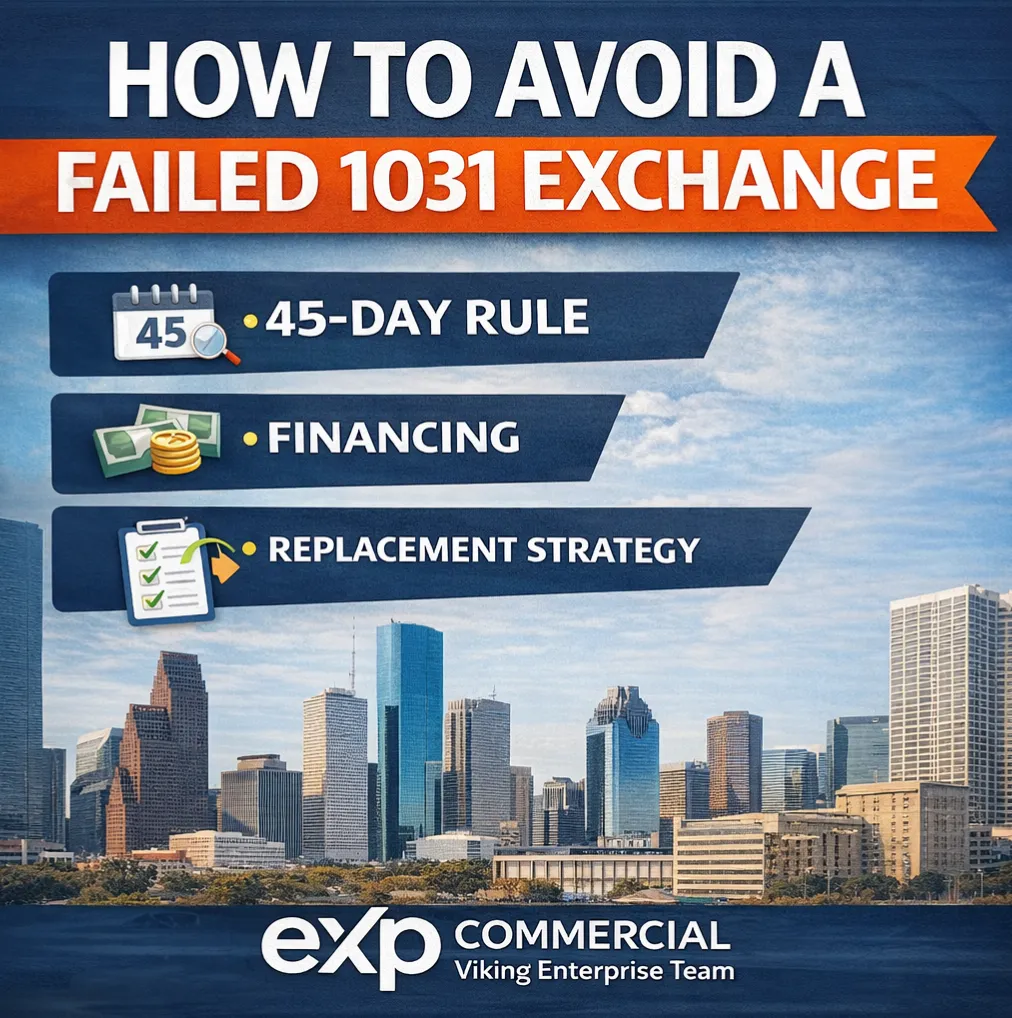
🚨 How to Avoid a Failed 1031 Exchange: Deadlines, Rules & Deal-Killers 🏢
🚨 How to Avoid a Failed 1031 Exchange: Deadlines, Rules & Deal-Killers 🏢
🔁 1031 Exchange Mistakes That Cost Investors Millions (And How to Avoid Them) 💰
How to Avoid a Failed 1031 Exchange
A 1031 exchange can be one of the most powerful wealth-building tools available to commercial real estate investors—when executed correctly. When done wrong, however, it can trigger an unexpected tax bill, derail reinvestment plans, and permanently damage long-term portfolio growth.
Each year, thousands of investors unintentionally fail their exchanges due to missed deadlines, financing missteps, or poor replacement property planning. Below is a practical, investor-focused guide to help you avoid the most common 1031 exchange failures and protect your capital.
1. Understand the 45-Day and 180-Day Deadlines (No Exceptions)
The most common cause of a failed 1031 exchange is missing deadlines.
Once your relinquished property closes:
·You have 45 calendar days to identify replacement properties in writing
·You have 180 calendar days to close on one or more of those properties
These timelines are strictly enforced by the Internal Revenue Service—there are no extensions for financing delays, inspection issues, or contract problems.
Strategy: Begin sourcing replacement properties before listing or closing your sale.
2. Identify the Right Properties (and Enough of Them)
Many exchanges fail because investors only identify one property—and it falls apart.
Best practice:
·Identify multiple replacement properties
·Use the 3-Property Rule or 200% Rule strategically
·Confirm zoning, use, and income suitability early
Waiting until day 40 to identify a property significantly increases failure risk.
3. Line Up Financing Before You Sell
Another major exchange killer is financing risk.
Replacement properties must be acquired with:
·Equal or greater debt
·Equal or greater purchase price
·No reduction in equity (“boot”)
If financing falls through after identification, the exchange may fail entirely.
Strategy:
Work with lenders who understand 1031 exchange timelines, DSCR requirements, and commercial underwriting standards before selling your property.
4. Use an Experienced Qualified Intermediary (QI)
You cannot touch the proceeds from the sale—even briefly.
A Qualified Intermediary must:
·Hold funds in escrow
·Prepare exchange documentation
·Coordinate deadlines and compliance
Choosing an inexperienced or low-cost QI increases operational and legal risk.
5. Avoid “Boot” and Structural Mistakes
Even if you close on time, an exchange can partially fail due to:
·Excess cash returned to the investor
·Debt reduction between properties
·Improper title vesting
·Buying property in a different ownership structure
These errors trigger taxable boot, defeating the purpose of the exchange.
6. Build a Backup Plan (Always)
Experienced investors assume something will break in every transaction.
Smart backup strategies include:
·Identifying additional properties beyond the minimum
·Using flexible property types (industrial, retail, medical, NNN)
·Coordinating brokerage and lending under one advisory strategy
Final Takeaway
A failed 1031 exchange is rarely caused by the market—it’s caused by poor coordination, late planning, and underestimating execution risk.
The most successful investors treat a 1031 exchange like a project, not a transaction:
·Early property identification
·Capital and financing aligned in advance
·One integrated advisory team
If you are considering a 1031 exchange, the best time to plan is before your property ever goes under contract.
https://www.houstonrealestatebrokerage.com/
https://www.houstonrealestatebrokerage.com/houston-cre-navigator
https://www.commercialexchange.com/agent/653bf5593e3a3e1dcec275a6
http://expressoffers.com/[email protected]
https://app.bullpenre.com/profile/1742476177701x437444415125976000
https://author.billrapponline.com/
https://www.amazon.com/dp/B0F32Z5BH2
https://veed.cello.so/FOmzTty6oi9
https://buymeacoffee.com/vikingente3
https://creplaybookseries.billrapponline.com
https://creplaybook.billrapponline.com/
© 2023-2024 Bill Rapp, Broker Associate, eXp Commercial Viking Enterprise Team

eXp Commercial - Viking Enterprise team real estate network provides unparalleled commercial real estate services to Tenants and Landlords around the greater Katy & Houston MSA area. Our knowledge, experience, and reputation sets us apart from many firms.
A commercial property owner might have various plans that would necessitate the services of a commercial real estate broker. Some of the common scenarios include:
1. Selling the Property: If the owner decides it’s time to sell the property, a commercial real estate broker can help determine the market value, market the property effectively, and negotiate with potential buyers to get the best possible price.
2. Leasing Space: For property owners looking to lease out part or all of their commercial space, a broker can help find suitable tenants, negotiate lease terms, and ensure the lease agreements meet all legal requirements and serve the owner’s best interests.
3. Acquiring More Properties: Owners looking to expand their portfolio would benefit from a broker's knowledge of the market, access to listings, and negotiation skills to secure additional properties at favorable terms.
4. Property Management: While not all brokers offer this service, some commercial real estate brokers or their affiliates offer property management services. This can be particularly appealing for owners who prefer a hands-off approach or are managing properties from a distance.
5. Market Analysis: Owners considering future developments, renovations, or rebranding of their property might engage a broker for a comprehensive market analysis. This helps in understanding current market trends, the demand for different types of spaces, and potential returns on investment for various strategies.
6. Refinancing: In situations where a property owner is looking to refinance their property, a commercial real estate broker can provide valuable insights into the property’s current market value, assist in gathering necessary documentation, and even help in finding the best financing options.
7. Partnership or Investment Opportunities: Owners interested in exploring partnerships, joint ventures, or seeking investors for expansion or development projects might use a broker to find and vet potential partners or investors.
8. Consulting on Zoning and Use Changes: When contemplating a change in the use of the property or dealing with zoning issues, a broker with experience in local regulations and the specific property type can provide guidance and strategic planning assistance.
9. Exit Strategy Planning: For owners looking to plan an exit strategy from their investment, whether it’s through a strategic sale or a gradual winding down of operations, brokers can provide market insights, timing advice, and valuation services to optimize the exit process.
In any of these scenarios, the expertise and services provided by a commercial real estate broker can save the property owner time and money, while also providing access to a wider network of potential buyers, tenants, and industry professionals. Give us a call today!

Find the perfect location for your business.
Let us help your business succeed.
🚨 How to Avoid a Failed 1031 Exchange: Deadlines, Rules & Deal-Killers 🏢
🚨 How to Avoid a Failed 1031 Exchange: Deadlines, Rules & Deal-Killers 🏢
🔁 1031 Exchange Mistakes That Cost Investors Millions (And How to Avoid Them) 💰
How to Avoid a Failed 1031 Exchange
A 1031 exchange can be one of the most powerful wealth-building tools available to commercial real estate investors—when executed correctly. When done wrong, however, it can trigger an unexpected tax bill, derail reinvestment plans, and permanently damage long-term portfolio growth.
Each year, thousands of investors unintentionally fail their exchanges due to missed deadlines, financing missteps, or poor replacement property planning. Below is a practical, investor-focused guide to help you avoid the most common 1031 exchange failures and protect your capital.
1. Understand the 45-Day and 180-Day Deadlines (No Exceptions)
The most common cause of a failed 1031 exchange is missing deadlines.
Once your relinquished property closes:
·You have 45 calendar days to identify replacement properties in writing
·You have 180 calendar days to close on one or more of those properties
These timelines are strictly enforced by the Internal Revenue Service—there are no extensions for financing delays, inspection issues, or contract problems.
Strategy: Begin sourcing replacement properties before listing or closing your sale.
2. Identify the Right Properties (and Enough of Them)
Many exchanges fail because investors only identify one property—and it falls apart.
Best practice:
·Identify multiple replacement properties
·Use the 3-Property Rule or 200% Rule strategically
·Confirm zoning, use, and income suitability early
Waiting until day 40 to identify a property significantly increases failure risk.
3. Line Up Financing Before You Sell
Another major exchange killer is financing risk.
Replacement properties must be acquired with:
·Equal or greater debt
·Equal or greater purchase price
·No reduction in equity (“boot”)
If financing falls through after identification, the exchange may fail entirely.
Strategy:
Work with lenders who understand 1031 exchange timelines, DSCR requirements, and commercial underwriting standards before selling your property.
4. Use an Experienced Qualified Intermediary (QI)
You cannot touch the proceeds from the sale—even briefly.
A Qualified Intermediary must:
·Hold funds in escrow
·Prepare exchange documentation
·Coordinate deadlines and compliance
Choosing an inexperienced or low-cost QI increases operational and legal risk.
5. Avoid “Boot” and Structural Mistakes
Even if you close on time, an exchange can partially fail due to:
·Excess cash returned to the investor
·Debt reduction between properties
·Improper title vesting
·Buying property in a different ownership structure
These errors trigger taxable boot, defeating the purpose of the exchange.
6. Build a Backup Plan (Always)
Experienced investors assume something will break in every transaction.
Smart backup strategies include:
·Identifying additional properties beyond the minimum
·Using flexible property types (industrial, retail, medical, NNN)
·Coordinating brokerage and lending under one advisory strategy
Final Takeaway
A failed 1031 exchange is rarely caused by the market—it’s caused by poor coordination, late planning, and underestimating execution risk.
The most successful investors treat a 1031 exchange like a project, not a transaction:
·Early property identification
·Capital and financing aligned in advance
·One integrated advisory team
If you are considering a 1031 exchange, the best time to plan is before your property ever goes under contract.
https://www.houstonrealestatebrokerage.com/
https://www.houstonrealestatebrokerage.com/houston-cre-navigator
https://www.commercialexchange.com/agent/653bf5593e3a3e1dcec275a6
http://expressoffers.com/[email protected]
https://app.bullpenre.com/profile/1742476177701x437444415125976000
https://author.billrapponline.com/
https://www.amazon.com/dp/B0F32Z5BH2
https://veed.cello.so/FOmzTty6oi9
https://buymeacoffee.com/vikingente3
https://creplaybookseries.billrapponline.com
https://creplaybook.billrapponline.com/
© 2023-2024 Bill Rapp, Broker Associate, eXp Commercial Viking Enterprise Team
Find the perfect location for your business.
Let us help your business succeed.
Sign up to receive the latest news on property investment and commercial real estate listings.
9600 Great Hills Trail, Suite 150w Austin, TX 78759 |
855.450.0324 xx255
Texas Real Estate Commission Consumer Protection Notice Texas Real Estate Commission
Information About Brokerage Services eXp Commercial LLC #9010212
Viking Enterprise LLC #9009614

Sign up to receive the latest news on property investment and commercial real estate listings.


Contact Us
901 S Mopac Expwy, Bldg 2, Suite 350 Austin, TX 78746 | 512.474.5557Texas Real Estate Commission
Consumer Protection Notice Texas Real Estate Commission Information About Brokerage Services Reliance Retail, LLC #603091
Texas RS, LLC #9003193 | RESOLUT RE Is Licensed In Louisiana #0995694083
Facebook
Instagram
X
LinkedIn
Youtube
TikTok