Your Trusted Houston Commercial Real Estate Brokerage
Viking Enterprise LLC is part of eXp Commercial, an agent-led, cloud-based commercial real estate brokerage with agents across the globe.
Email: [email protected]
Call: (281) 222-0433
Your Trusted Katy / Fulshear & Houston Commercial Real Estate Brokerage
Viking Enterprise LLC is part of eXp Commercial, an agent-led, cloud-based commercial real estate brokerage with agents across the globe.
Looking to invest, buy, sell or lease? We can help.
Looking to invest, buy, sell or lease? We can help.
FEATURED PROPERTIES




OUR FEATURED TENANTS & CLIENTS
eXp Commercial - Viking Enterprise Team's real estate network provides unparalleled commercial real estate services to Tenants and Landlords around the Katy- Houston area. Our knowledge, experience, and reputation sets us apart from many firms.
A commercial property owner might have various plans that would necessitate the services of a commercial real estate broker. Some of the common scenarios include:
1. Selling the Property: If the owner decides it’s time to sell the property, a commercial real estate broker can help determine the market value, market the property effectively, and negotiate with potential buyers to get the best possible price.
2. Leasing Space: For property owners looking to lease out part or all of their commercial space, a broker can help find suitable tenants, negotiate lease terms, and ensure the lease agreements meet all legal requirements and serve the owner’s best interests.
3. Acquiring More Properties: Owners looking to expand their portfolio would benefit from a broker's knowledge of the market, access to listings, and negotiation skills to secure additional properties at favorable terms.
4. Property Management: While not all brokers offer this service, some commercial real estate brokers or their affiliates offer property management services. This can be particularly appealing for owners who prefer a hands-off approach or are managing properties from a distance.
5. Market Analysis: Owners considering future developments, renovations, or rebranding of their property might engage a broker for a comprehensive market analysis. This helps in understanding current market trends, the demand for different types of spaces, and potential returns on investment for various strategies.
6. Refinancing: In situations where a property owner is looking to refinance their property, a commercial real estate broker can provide valuable insights into the property’s current market value, assist in gathering necessary documentation, and even help in finding the best financing options.
7. Partnership or Investment Opportunities: Owners interested in exploring partnerships, joint ventures, or seeking investors for expansion or development projects might use a broker to find and vet potential partners or investors.
8. Consulting on Zoning and Use Changes: When contemplating a change in the use of the property or dealing with zoning issues, a broker with experience in local regulations and the specific property type can provide guidance and strategic planning assistance.
9. Exit Strategy Planning: For owners looking to plan an exit strategy from their investment, whether it’s through a strategic sale or a gradual winding down of operations, brokers can provide market insights, timing advice, and valuation services to optimize the exit process.
In any of these scenarios, the expertise and services provided by a commercial real estate broker can save the property owner time and money, while also providing access to a wider network of potential buyers, tenants, and industry professionals. Give us a call today!
Reviews
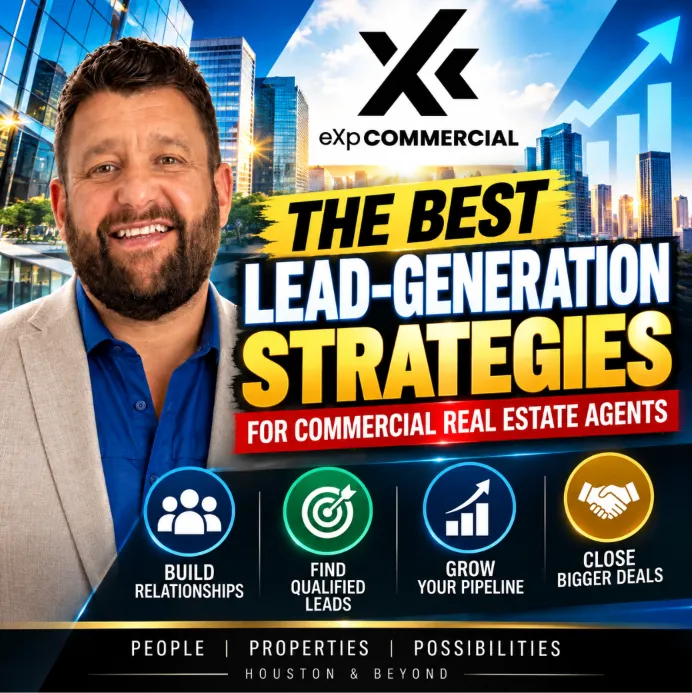
🚀 The 10 Best Lead-Generation Strategies for Commercial Real Estate Agents: Build Your Pipeline & Win More Clients! 📈
🚀 The 10 Best Lead-Generation Strategies for Commercial Real Estate Agents: Build Your Pipeline & Win More Clients! 📈
🏢 How to Generate Commercial Real Estate Leads: 10 Proven Strategies to Attract Investors, Property Owners & Business Clients! 💰
________________________________________________________________________________
The 10 Best Lead-Generation Strategies for Commercial Real Estate Agents
How to Build a Consistent Pipeline of Commercial Property Owners, Investors, Tenants, and Business Clients
In commercial real estate, success rarely comes from simply waiting for the phone to ring.
The most successful commercial real estate agents understand that building a sustainable business requires a consistent, strategic approach to commercial real estate lead generation.
Whether you specialize in retail, industrial, office, multifamily, land, or investment sales, your ability to identify prospects, build relationships, and convert opportunities into transactions directly affects your long-term success.
But here's the challenge:
Not all leads are created equal.
A property owner considering selling in the next 12 months may be more valuable than 100 unqualified online inquiries.
A business owner planning an expansion could become a tenant representation client today and a property buyer five years from now.
And a commercial investor who trusts your underwriting expertise may eventually bring multiple acquisitions, dispositions, and referrals.
The goal isn't simply to generate more leads.
The goal is to build a predictable pipeline of qualified relationships that turn into transactions.
Let's examine 10 of the best lead-generation strategies for commercial real estate agents.
1. Build a Targeted Commercial Property Owner Database
One of the most effective ways to generate commercial real estate leads is to identify and build relationships with property owners before they need your services.
Start by selecting a geographic market and property specialization.
For example, an agent working in Katy, Fulshear, or West Houston might focus on:
·Retail shopping center owners
·Industrial warehouse investors
·Medical office building owners
·Multifamily property investors
·Commercial landowners
·Small business owner-occupants
Using resources such as CoStar, Reonomy, public appraisal district records, and other property research tools, agents can identify ownership information and property characteristics.
Develop a database that tracks:
·Property address and type
·Ownership entity
·Available owner contact information
·Acquisition date
·Estimated property value
·Known debt or maturity information
·Lease expiration dates, when available
·Potential investment or disposition motivations
Pro Tip: Don't make every conversation about selling.
Instead, offer valuable information about market conditions, financing, leasing demand, or potential property values.
Property owners are more likely to remember advisors who provide useful insights without immediately asking for a listing.
2. Develop Relationships With Commercial Real Estate Investors
Commercial investors can become some of your most valuable long-term clients.
Unlike many one-time transactions, active investors may acquire, refinance, reposition, or sell multiple properties over time.
Start by identifying investors who specialize in your market.
Potential prospects include:
·Local commercial property investors
·Out-of-state investors entering Texas
·1031 exchange buyers
·Private investment groups
·Family offices
·Small multifamily investors
·Business owners purchasing investment property
The key is understanding their investment criteria.
Ask questions such as:
What property types are you targeting?
What is your preferred acquisition price range?
What minimum return or cash flow requirements do you have?
Are you looking for stabilized income or value-add opportunities?
Will you use financing or purchase with cash?
By understanding these factors, you can send investors relevant opportunities rather than overwhelming them with properties that don't fit their objectives.
Become an Investment Advisor, Not Just a Property Finder
Investors value agents who understand:
·Net operating income (NOI)
·Capitalization rates
·Cash-on-cash returns
·Debt service coverage ratios (DSCR)
·Loan-to-value ratios (LTV)
·Tenant credit quality
·Lease structures
·Exit capitalization rates
The ability to evaluate financial performance helps distinguish a commercial real estate advisor from an agent who simply forwards listings.
3. Build Strategic Referral Relationships
Some of the best commercial real estate leads come from professionals who already advise business owners and investors.
Consider developing referral relationships with:
CPAs and Tax Advisors
CPAs frequently work with clients considering property sales, 1031 exchanges, business expansions, and investment acquisitions.
Commercial Lenders
Bankers may encounter borrowers who need help purchasing or selling commercial real estate.
Business Brokers
When businesses are sold, their real estate needs may change. Some transactions involve both the operating business and the property.
Attorneys
Real estate, estate planning, and business attorneys often advise clients involved in property transactions.
Financial Advisors
Financial planners may work with investors seeking income-producing assets or portfolio diversification.
Residential Real Estate Agents
Residential agents frequently encounter clients who own businesses or investment properties but need commercial expertise.
The Referral Strategy That Works
Instead of simply asking someone to send you business, explain exactly what a qualified referral looks like.
For example:
"My ideal client is a commercial property owner in Katy or West Houston considering selling a retail, industrial, or multifamily investment property."
Specific referral requests are easier to remember and act upon.
Always comply with applicable licensing, compensation, and referral rules.
4. Use LinkedIn to Reach Business Owners and Investors
LinkedIn is particularly useful for commercial real estate prospecting because it connects agents directly with business owners, executives, investors, developers, and professional advisors.
However, successful LinkedIn lead generation requires more than posting listings.
Create content that helps your target audience make better real estate decisions.
Examples include:
·Should your business buy or lease its commercial space?
·How much down payment is required to purchase a warehouse?
·What makes a commercial property a good investment?
·How do NNN leases affect occupancy costs?
·What should investors know before purchasing a shopping center?
·How can business owners prepare for a commercial mortgage?
These topics attract people who may eventually need commercial brokerage services.
A Simple LinkedIn Prospecting Routine
Spend approximately 20–30 minutes each business day:
1.Connect with relevant local business owners and investors.
2.Comment thoughtfully on posts from prospective clients.
3.Publish useful commercial real estate insights.
4.Follow up with existing connections.
5.Invite appropriate prospects to a brief conversation.
Avoid immediately pitching every new connection.
Build credibility first. Business opportunities follow relationships.
5. Create Educational YouTube Videos and Blog Content
One of the most scalable commercial real estate marketing strategies is producing educational content that answers questions your potential clients are already asking.
Consider the questions commercial investors and business owners search for online:
·How do I buy commercial real estate?
·What is a good cap rate?
·How much does commercial property cost in Houston?
·Should I lease or purchase office space?
·How do commercial real estate loans work?
·What is the difference between gross and NNN leases?
Each question represents an opportunity to attract a potential client.
Turn One Topic Into Multiple Marketing Assets
For example, create a YouTube video titled:
"Buying vs. Leasing Commercial Real Estate: Which Makes More Sense?"
Then repurpose that video into:
·A search-engine-optimized blog post
·A LinkedIn article
·Two short-form videos
·An Instagram carousel
·A Facebook post
·An email newsletter feature
This approach allows one educational topic to reach multiple audiences.
Why Educational Content Generates Leads
Educational marketing helps prospects understand your expertise before they contact you.
When someone watches several of your videos explaining investment analysis, leasing strategies, or commercial financing, they begin to recognize your professional knowledge.
That familiarity can make future conversations more productive.
Consistency matters more than producing one viral video.
6. Use Commercial Real Estate SEO to Attract Local Leads
Search engine optimization helps commercial real estate agents become discoverable when potential clients search for services in their markets.
For agents working in Greater Houston, useful search phrases may include:
·Commercial real estate broker Houston
·Commercial real estate agent Katy TX
·Commercial property for sale West Houston
·Industrial warehouse for lease Katy
·Retail space for lease Fulshear
·Commercial investment properties Houston
Build website pages around specific services, property types, and geographic markets.
Essential Local SEO Activities
Optimize Your Google Business Profile
Keep your business information, service descriptions, website, and contact details accurate.
Publish Local Market Content
Create articles addressing commercial real estate trends in Katy, Fulshear, Cinco Ranch, the Energy Corridor, and Greater Houston.
Develop Property-Type Pages
Build dedicated pages for retail, office, industrial, land, and investment sales.
Use Clear Calls to Action
Every major page should make it easy for visitors to request a consultation, property evaluation, or investment discussion.
Measure Lead Quality
Track which website pages produce qualified conversations rather than focusing only on website traffic.
7. Prospect Business Owners Before They Need Space
Business owners represent an important commercial real estate lead source.
Many companies eventually need to:
·Open additional locations
·Relocate operations
·Expand warehouse capacity
·Purchase an owner-occupied building
·Renegotiate an existing lease
·Consolidate multiple facilities
·Sell their business and real estate
The most effective agents identify these needs before a company actively starts searching.
Look for Business Expansion Signals
Potential indicators include:
·Hiring announcements
·New funding or investment
·Increased production capacity
·New market expansion
·Business acquisitions
·Lease expiration dates
·Significant changes in operations
For example, a growing medical practice in Katy may eventually need additional office space.
A contractor expanding in Fulshear may require a larger industrial facility with outdoor storage.
An established retailer may want to purchase its building rather than continue leasing.
By understanding these business developments, agents can begin conversations early.
8. Generate Leads Through Commercial Financing Expertise
Financing knowledge can create a competitive advantage in commercial real estate brokerage.
Many prospective buyers don't know whether they qualify to purchase commercial property.
Others misunderstand down payment requirements, debt coverage, or the differences between conventional and SBA financing.
An agent who understands financing can help clients evaluate their options earlier in the transaction process.
Common Financing Topics That Attract Prospects
SBA Commercial Real Estate Loans
Eligible owner-occupied business acquisitions may qualify for financing structures requiring approximately 10% borrower equity, depending on the program, project, and underwriting.
Conventional Commercial Mortgages
Banks commonly evaluate property cash flow, borrower financial strength, loan-to-value, and repayment capacity.
DSCR Financing
Investment-property lenders frequently focus on whether the property's cash flow supports the proposed debt service.
Bridge and Value-Add Financing
Short-term financing may be appropriate for certain transitional properties, subject to business plans, reserves, and exit strategies.
1031 Exchange Financing
Investors completing tax-deferred exchanges may need acquisition financing that aligns with strict transaction deadlines.
Why Financing Knowledge Matters
Imagine two agents competing to represent a business owner purchasing a $2 million building.
One agent simply identifies available properties.
The other helps evaluate occupancy requirements, potential financing structures, estimated equity needs, and financial feasibility.
Which agent is more likely to become a trusted advisor?
Commercial brokerage and financing knowledge work together to help clients make informed decisions.
9. Build a Consistent CRM Follow-Up System
Commercial real estate transactions frequently take months or even years to develop.
A property owner who isn't ready to sell today may become a listing client next year.
A business owner who signs a five-year lease may eventually become an owner-occupant buyer.
Without a consistent follow-up system, these opportunities can disappear.
Organize Your CRM by Prospect Type
Consider categories such as:
·Property owners
·Active buyers
·Long-term investors
·Tenants
·Business owners
·Developers
·Referral partners
·Past clients
Track each prospect's:
·Real estate objectives
·Property preferences
·Investment criteria
·Target timeline
·Last conversation
·Next follow-up date
A Practical Follow-Up Framework
Active Opportunities: Follow up as frequently as the transaction requires.
Near-Term Prospects: Schedule relevant conversations approximately every 30 days.
Long-Term Prospects: Maintain contact through quarterly market updates or personalized check-ins.
Referral Partners: Build regular communication and reciprocal professional relationships.
The key is delivering useful information rather than sending generic messages.
10. Become the Recognized Commercial Real Estate Expert in Your Market
One of the strongest long-term lead-generation strategies is developing a reputation for expertise in a specific market or property type.
Instead of attempting to serve every commercial real estate prospect everywhere, become known for a clear specialty.
For example:
"Commercial real estate investment sales in Katy and West Houston."
Or:
"Helping business owners buy, sell, and lease commercial property throughout Greater Houston."
Develop your expertise through:
·Local market research
·Consistent educational content
·Property tours
·Investment analysis
·Community involvement
·Professional networking
·Market presentations
·Case studies
·Client relationships
Specialization Creates Recognition
When investors, business owners, bankers, and attorneys repeatedly encounter your expertise, they begin associating your name with commercial real estate solutions.
Over time, that recognition can generate referrals, inbound inquiries, and repeat business.
Bonus: A Simple Weekly Lead-Generation Plan for Commercial Agents
Commercial real estate agents don't need 20 different marketing platforms.
They need a manageable prospecting system they can execute consistently.
Day | Lead-Generation Activity |
Monday | Research 10 target property owners and publish educational content |
Tuesday | Connect with 10 business owners or investors on LinkedIn |
Wednesday | Contact 5 referral partners and follow up with prospects |
Thursday | Research local transactions, leasing activity, and ownership opportunities |
Friday | Review CRM pipeline and schedule next week's follow-ups |
These are suggested activity targets, not guaranteed production benchmarks.
Track the Metrics That Matter
Measure:
1.New qualified contacts added
2.Meaningful prospect conversations
3.Appointments scheduled
4.Qualified opportunities identified
5.Proposals and listing presentations delivered
6.Signed representation agreements
7.Closed transactions
8.Revenue generated by lead source
Over time, these metrics reveal which strategies actually produce business.
The Biggest Commercial Real Estate Lead-Generation Mistake
Many agents focus almost exclusively on finding their next transaction.
But successful commercial real estate businesses are built by developing relationships long before someone is ready to buy, sell, or lease.
A strong pipeline includes:
Immediate opportunities: Prospects actively evaluating a transaction.
Future opportunities: Owners, investors, and businesses with potential needs over the next 6–18 months.
Long-term relationships: Professional contacts who may become clients or referral sources in the future.
By building all three, agents reduce their dependence on any single transaction or marketing channel.
Frequently Asked Questions
What is the best way to generate commercial real estate leads?
A combination of targeted property-owner prospecting, investor relationships, referral partnerships, local SEO, educational content, and consistent CRM follow-up is generally more resilient than relying on one source.
How do new commercial real estate agents find clients?
New agents can begin by selecting a geographic market, researching property owners, connecting with local business owners, developing referral relationships, and publishing educational content.
Does LinkedIn work for commercial real estate lead generation?
Yes. LinkedIn can be particularly useful for reaching business owners, executives, investors, and professional referral partners when paired with relevant content and personalized outreach.
How can commercial real estate agents attract investors?
Agents can attract investors by demonstrating market knowledge, understanding investment criteria, providing credible underwriting, and identifying opportunities aligned with investor objectives.
Is cold calling effective in commercial real estate?
Targeted, compliant calling can be useful, particularly when agents research ownership and provide relevant information. Agents should observe applicable Do Not Call, telemarketing, and privacy requirements.
How long does commercial real estate lead generation take?
Results vary considerably. Some relationships lead to immediate opportunities, while others may require months or years of consistent engagement.
Should commercial agents focus on buyers or sellers?
Both can generate business. A balanced strategy may include property owners, buyers, investors, tenants, and referral partners, with priorities determined by the agent's specialization.
Final Thoughts: Build Relationships Before You Need the Deal
The best commercial real estate lead-generation strategy isn't necessarily the newest technology or the most expensive marketing platform.
It's a consistent process built around:
Relationships. Expertise. Visibility. Follow-Up.
Successful agents understand their markets, educate their clients, and develop relationships that continue beyond individual transactions.
Whether you're a new commercial real estate agent or an experienced broker looking to expand your business, the objective is the same:
Build a predictable pipeline of qualified opportunities while positioning yourself as a trusted commercial real estate advisor.
Work With the Viking Enterprise Team at eXp Commercial
Are you a commercial real estate agent looking to grow your business, strengthen your investment analysis skills, and develop a more effective prospecting strategy?
Or are you a commercial property owner, investor, or business owner looking for experienced representation in Greater Houston?
I'm Bill Rapp, CCIM, with the Viking Enterprise Team at eXp Commercial.
Our focus includes commercial real estate brokerage, investment analysis, leasing, acquisitions, dispositions, and capital advisory.
We serve clients throughout Katy, Fulshear, West Houston, and the Greater Houston area.
Bill Rapp, CCIM
eXp Commercial — Viking Enterprise Team
📍 Serving Katy | Fulshear | Richmond | Brookshire | West Houston | Greater Houston
📧 [email protected]
☎️ 281-222-0433
🌐 HoustonRealEstateBrokerage.com
📍 eXp Commercial & eXp Realty
📅 Calendly.com/VikingEnterprise
https://www.houstonrealestatebrokerage.com/
https://www.houstonrealestatebrokerage.com/houston-cre-navigator
https://www.commercialexchange.com/agent/653bf5593e3a3e1dcec275a6
http://expressoffers.com/[email protected]
https://app.bullpenre.com/profile/1742476177701x437444415125976000
https://author.billrapponline.com/
https://www.amazon.com/dp/B0F32Z5BH2
https://veed.cello.so/FOmzTty6oi9
https://buymeacoffee.com/vikingente3
https://creplaybookseries.billrapponline.com
https://creplaybook.billrapponline.com/
© Bill Rapp, Broker Associate, eXp Commercial Viking Enterprise Team

Commercial Real Estate Advisors Serving Katy, Fulshear & Greater Houston
Helping Property Owners, Investors & Businesses Make Smarter Commercial Real Estate Decisions
Whether you're buying, selling, leasing, investing, or financing commercial real estate, having the right advisor can make all the difference.
At eXp Commercial – Viking Enterprise Team, we provide comprehensive commercial real estate brokerage and advisory services for property owners, investors, developers, landlords, tenants, and business owners throughout Katy, Fulshear, Houston, and the surrounding Texas markets.
Our team combines local market expertise with commercial investment knowledge and capital markets experience to help clients maximize property value, identify new opportunities, reduce risk, and achieve long-term investment success.
From a single office building to a growing investment portfolio, we provide strategic guidance from acquisition through disposition.
Comprehensive Commercial Real Estate Services
Commercial Property Sales
Selling commercial real estate requires far more than placing a property on the market. We develop customized marketing strategies designed to maximize exposure while targeting qualified buyers locally, regionally, and nationally.
Our services include:
Property valuation and pricing strategy
Investment analysis
Professional marketing campaigns
Buyer qualification
Contract negotiation
Due diligence coordination
Transaction management through closing
Whether you're selling office, retail, industrial, multifamily, land, medical, mixed-use, or investment property, our objective is simple—maximize your property's value while creating a smooth transaction.
Commercial Leasing Services
Vacancies reduce cash flow and impact property performance.
We help landlords lease available space by creating effective marketing campaigns, identifying qualified tenants, negotiating favorable lease terms, and minimizing downtime.
Our leasing services include:
Office leasing
Retail leasing
Industrial leasing
Medical office leasing
Flex space leasing
Warehouse leasing
Landlord representation
Tenant representation
Lease renewals
Lease negotiations
Our goal is to keep your property occupied with quality tenants while protecting your long-term investment.
Commercial Property Acquisitions
Whether you're purchasing your first commercial property or expanding a large investment portfolio, we help identify opportunities that align with your investment objectives.
Our acquisition services include:
Market research
Property sourcing
Financial analysis
Cap rate evaluation
Cash flow analysis
Due diligence
Negotiation
Closing coordination
We help investors make informed decisions backed by market data and financial analysis—not emotion.
Investment Property Analysis
Every investment should begin with a thorough understanding of risk and return.
We assist investors by evaluating:
Net Operating Income (NOI)
Capitalization Rates
Cash-on-Cash Returns
Internal Rate of Return (IRR)
Market Rent Analysis
Occupancy Trends
Comparable Sales
Exit Strategies
Our investment analysis helps clients make data-driven decisions before committing capital.
Commercial Financing & Capital Advisory
One of the biggest advantages of working with Viking Enterprise Team is access to commercial financing expertise.
Through our capital markets relationships, we help clients evaluate financing options for acquisitions, refinancing, construction, bridge financing, SBA loans, investment properties, and owner-occupied commercial real estate.
We help clients:
Evaluate financing options
Analyze refinancing opportunities
Improve loan positioning
Understand lender requirements
Coordinate with commercial lenders
Structure financing strategies
Real estate and financing should work together—not independently.
Portfolio Growth & Investment Strategy
Building long-term wealth through commercial real estate requires strategic planning.
We work with investors to:
Expand investment portfolios
Identify off-market opportunities
Improve portfolio performance
Evaluate redevelopment opportunities
Reposition underperforming assets
Develop long-term acquisition strategies
Whether you're purchasing your second investment or your fiftieth, we help create a roadmap for continued growth.
Landlord Representation
Commercial property owners face constant challenges:
Tenant turnover
Lease negotiations
Rental rates
Market competition
Property positioning
We provide landlord representation focused on maximizing occupancy, improving lease terms, increasing property value, and strengthening long-term cash flow.
Tenant Representation
Businesses often outgrow their current space or need a location that better supports future growth.
We represent tenants throughout the site selection process, helping negotiate favorable lease terms while identifying properties that fit operational and financial objectives.
Our tenant services include:
Office space
Retail locations
Industrial facilities
Warehouse space
Medical offices
Flex properties
Build-to-suit opportunities
Market Analysis & Commercial Consulting
Successful commercial real estate decisions begin with accurate market intelligence.
Our advisory services include:
Market studies
Property positioning
Rent analysis
Development feasibility
Redevelopment analysis
Demographic research
Growth corridor identification
Competitive property analysis
Whether you're considering selling today or planning five years ahead, we help you understand where the market is headed.
Joint Ventures & Investment Partnerships
Many commercial opportunities require additional equity, strategic partners, or experienced investors.
We help facilitate introductions between qualified investors, developers, operators, and commercial property owners seeking partnership opportunities for acquisitions, development, redevelopment, or recapitalization.
Exit Planning & Wealth Preservation
Every commercial investment eventually reaches a transition point.
Whether you're considering:
Selling
Refinancing
Recapitalizing
Completing a 1031 Exchange
Passing assets to the next generation
Repositioning your portfolio
we help create an exit strategy that aligns with your financial goals while maximizing value and minimizing unnecessary risk.
Why Choose Viking Enterprise Team?
Commercial real estate is about more than buying and selling properties—it's about creating long-term value.
Our clients benefit from:
Local expertise throughout Katy, Fulshear, Houston, and surrounding markets
Experience representing investors, developers, business owners, landlords, and tenants
Comprehensive brokerage and advisory services
Commercial financing insight and capital markets knowledge
Investment-focused analysis
Strategic negotiation
Professional marketing
Personalized service from initial consultation through closing
We believe informed clients make better decisions, and our role is to provide the expertise, market intelligence, and guidance needed to help you succeed.
Let's Discuss Your Commercial Real Estate Goals
Whether you're buying, selling, leasing, investing, refinancing, or planning your next commercial real estate transaction, Viking Enterprise Team is ready to help.
Schedule a confidential consultation to discuss your objectives and discover how our experience, market knowledge, and strategic approach can help you maximize the value of your commercial real estate investments.
Contact eXp Commercial – Viking Enterprise Team today and let's build your commercial real estate strategy together.


Find the perfect location for your business.
Let us help your business succeed.
🚀 The 10 Best Lead-Generation Strategies for Commercial Real Estate Agents: Build Your Pipeline & Win More Clients! 📈
🚀 The 10 Best Lead-Generation Strategies for Commercial Real Estate Agents: Build Your Pipeline & Win More Clients! 📈
🏢 How to Generate Commercial Real Estate Leads: 10 Proven Strategies to Attract Investors, Property Owners & Business Clients! 💰
________________________________________________________________________________
The 10 Best Lead-Generation Strategies for Commercial Real Estate Agents
How to Build a Consistent Pipeline of Commercial Property Owners, Investors, Tenants, and Business Clients
In commercial real estate, success rarely comes from simply waiting for the phone to ring.
The most successful commercial real estate agents understand that building a sustainable business requires a consistent, strategic approach to commercial real estate lead generation.
Whether you specialize in retail, industrial, office, multifamily, land, or investment sales, your ability to identify prospects, build relationships, and convert opportunities into transactions directly affects your long-term success.
But here's the challenge:
Not all leads are created equal.
A property owner considering selling in the next 12 months may be more valuable than 100 unqualified online inquiries.
A business owner planning an expansion could become a tenant representation client today and a property buyer five years from now.
And a commercial investor who trusts your underwriting expertise may eventually bring multiple acquisitions, dispositions, and referrals.
The goal isn't simply to generate more leads.
The goal is to build a predictable pipeline of qualified relationships that turn into transactions.
Let's examine 10 of the best lead-generation strategies for commercial real estate agents.
1. Build a Targeted Commercial Property Owner Database
One of the most effective ways to generate commercial real estate leads is to identify and build relationships with property owners before they need your services.
Start by selecting a geographic market and property specialization.
For example, an agent working in Katy, Fulshear, or West Houston might focus on:
·Retail shopping center owners
·Industrial warehouse investors
·Medical office building owners
·Multifamily property investors
·Commercial landowners
·Small business owner-occupants
Using resources such as CoStar, Reonomy, public appraisal district records, and other property research tools, agents can identify ownership information and property characteristics.
Develop a database that tracks:
·Property address and type
·Ownership entity
·Available owner contact information
·Acquisition date
·Estimated property value
·Known debt or maturity information
·Lease expiration dates, when available
·Potential investment or disposition motivations
Pro Tip: Don't make every conversation about selling.
Instead, offer valuable information about market conditions, financing, leasing demand, or potential property values.
Property owners are more likely to remember advisors who provide useful insights without immediately asking for a listing.
2. Develop Relationships With Commercial Real Estate Investors
Commercial investors can become some of your most valuable long-term clients.
Unlike many one-time transactions, active investors may acquire, refinance, reposition, or sell multiple properties over time.
Start by identifying investors who specialize in your market.
Potential prospects include:
·Local commercial property investors
·Out-of-state investors entering Texas
·1031 exchange buyers
·Private investment groups
·Family offices
·Small multifamily investors
·Business owners purchasing investment property
The key is understanding their investment criteria.
Ask questions such as:
What property types are you targeting?
What is your preferred acquisition price range?
What minimum return or cash flow requirements do you have?
Are you looking for stabilized income or value-add opportunities?
Will you use financing or purchase with cash?
By understanding these factors, you can send investors relevant opportunities rather than overwhelming them with properties that don't fit their objectives.
Become an Investment Advisor, Not Just a Property Finder
Investors value agents who understand:
·Net operating income (NOI)
·Capitalization rates
·Cash-on-cash returns
·Debt service coverage ratios (DSCR)
·Loan-to-value ratios (LTV)
·Tenant credit quality
·Lease structures
·Exit capitalization rates
The ability to evaluate financial performance helps distinguish a commercial real estate advisor from an agent who simply forwards listings.
3. Build Strategic Referral Relationships
Some of the best commercial real estate leads come from professionals who already advise business owners and investors.
Consider developing referral relationships with:
CPAs and Tax Advisors
CPAs frequently work with clients considering property sales, 1031 exchanges, business expansions, and investment acquisitions.
Commercial Lenders
Bankers may encounter borrowers who need help purchasing or selling commercial real estate.
Business Brokers
When businesses are sold, their real estate needs may change. Some transactions involve both the operating business and the property.
Attorneys
Real estate, estate planning, and business attorneys often advise clients involved in property transactions.
Financial Advisors
Financial planners may work with investors seeking income-producing assets or portfolio diversification.
Residential Real Estate Agents
Residential agents frequently encounter clients who own businesses or investment properties but need commercial expertise.
The Referral Strategy That Works
Instead of simply asking someone to send you business, explain exactly what a qualified referral looks like.
For example:
"My ideal client is a commercial property owner in Katy or West Houston considering selling a retail, industrial, or multifamily investment property."
Specific referral requests are easier to remember and act upon.
Always comply with applicable licensing, compensation, and referral rules.
4. Use LinkedIn to Reach Business Owners and Investors
LinkedIn is particularly useful for commercial real estate prospecting because it connects agents directly with business owners, executives, investors, developers, and professional advisors.
However, successful LinkedIn lead generation requires more than posting listings.
Create content that helps your target audience make better real estate decisions.
Examples include:
·Should your business buy or lease its commercial space?
·How much down payment is required to purchase a warehouse?
·What makes a commercial property a good investment?
·How do NNN leases affect occupancy costs?
·What should investors know before purchasing a shopping center?
·How can business owners prepare for a commercial mortgage?
These topics attract people who may eventually need commercial brokerage services.
A Simple LinkedIn Prospecting Routine
Spend approximately 20–30 minutes each business day:
1.Connect with relevant local business owners and investors.
2.Comment thoughtfully on posts from prospective clients.
3.Publish useful commercial real estate insights.
4.Follow up with existing connections.
5.Invite appropriate prospects to a brief conversation.
Avoid immediately pitching every new connection.
Build credibility first. Business opportunities follow relationships.
5. Create Educational YouTube Videos and Blog Content
One of the most scalable commercial real estate marketing strategies is producing educational content that answers questions your potential clients are already asking.
Consider the questions commercial investors and business owners search for online:
·How do I buy commercial real estate?
·What is a good cap rate?
·How much does commercial property cost in Houston?
·Should I lease or purchase office space?
·How do commercial real estate loans work?
·What is the difference between gross and NNN leases?
Each question represents an opportunity to attract a potential client.
Turn One Topic Into Multiple Marketing Assets
For example, create a YouTube video titled:
"Buying vs. Leasing Commercial Real Estate: Which Makes More Sense?"
Then repurpose that video into:
·A search-engine-optimized blog post
·A LinkedIn article
·Two short-form videos
·An Instagram carousel
·A Facebook post
·An email newsletter feature
This approach allows one educational topic to reach multiple audiences.
Why Educational Content Generates Leads
Educational marketing helps prospects understand your expertise before they contact you.
When someone watches several of your videos explaining investment analysis, leasing strategies, or commercial financing, they begin to recognize your professional knowledge.
That familiarity can make future conversations more productive.
Consistency matters more than producing one viral video.
6. Use Commercial Real Estate SEO to Attract Local Leads
Search engine optimization helps commercial real estate agents become discoverable when potential clients search for services in their markets.
For agents working in Greater Houston, useful search phrases may include:
·Commercial real estate broker Houston
·Commercial real estate agent Katy TX
·Commercial property for sale West Houston
·Industrial warehouse for lease Katy
·Retail space for lease Fulshear
·Commercial investment properties Houston
Build website pages around specific services, property types, and geographic markets.
Essential Local SEO Activities
Optimize Your Google Business Profile
Keep your business information, service descriptions, website, and contact details accurate.
Publish Local Market Content
Create articles addressing commercial real estate trends in Katy, Fulshear, Cinco Ranch, the Energy Corridor, and Greater Houston.
Develop Property-Type Pages
Build dedicated pages for retail, office, industrial, land, and investment sales.
Use Clear Calls to Action
Every major page should make it easy for visitors to request a consultation, property evaluation, or investment discussion.
Measure Lead Quality
Track which website pages produce qualified conversations rather than focusing only on website traffic.
7. Prospect Business Owners Before They Need Space
Business owners represent an important commercial real estate lead source.
Many companies eventually need to:
·Open additional locations
·Relocate operations
·Expand warehouse capacity
·Purchase an owner-occupied building
·Renegotiate an existing lease
·Consolidate multiple facilities
·Sell their business and real estate
The most effective agents identify these needs before a company actively starts searching.
Look for Business Expansion Signals
Potential indicators include:
·Hiring announcements
·New funding or investment
·Increased production capacity
·New market expansion
·Business acquisitions
·Lease expiration dates
·Significant changes in operations
For example, a growing medical practice in Katy may eventually need additional office space.
A contractor expanding in Fulshear may require a larger industrial facility with outdoor storage.
An established retailer may want to purchase its building rather than continue leasing.
By understanding these business developments, agents can begin conversations early.
8. Generate Leads Through Commercial Financing Expertise
Financing knowledge can create a competitive advantage in commercial real estate brokerage.
Many prospective buyers don't know whether they qualify to purchase commercial property.
Others misunderstand down payment requirements, debt coverage, or the differences between conventional and SBA financing.
An agent who understands financing can help clients evaluate their options earlier in the transaction process.
Common Financing Topics That Attract Prospects
SBA Commercial Real Estate Loans
Eligible owner-occupied business acquisitions may qualify for financing structures requiring approximately 10% borrower equity, depending on the program, project, and underwriting.
Conventional Commercial Mortgages
Banks commonly evaluate property cash flow, borrower financial strength, loan-to-value, and repayment capacity.
DSCR Financing
Investment-property lenders frequently focus on whether the property's cash flow supports the proposed debt service.
Bridge and Value-Add Financing
Short-term financing may be appropriate for certain transitional properties, subject to business plans, reserves, and exit strategies.
1031 Exchange Financing
Investors completing tax-deferred exchanges may need acquisition financing that aligns with strict transaction deadlines.
Why Financing Knowledge Matters
Imagine two agents competing to represent a business owner purchasing a $2 million building.
One agent simply identifies available properties.
The other helps evaluate occupancy requirements, potential financing structures, estimated equity needs, and financial feasibility.
Which agent is more likely to become a trusted advisor?
Commercial brokerage and financing knowledge work together to help clients make informed decisions.
9. Build a Consistent CRM Follow-Up System
Commercial real estate transactions frequently take months or even years to develop.
A property owner who isn't ready to sell today may become a listing client next year.
A business owner who signs a five-year lease may eventually become an owner-occupant buyer.
Without a consistent follow-up system, these opportunities can disappear.
Organize Your CRM by Prospect Type
Consider categories such as:
·Property owners
·Active buyers
·Long-term investors
·Tenants
·Business owners
·Developers
·Referral partners
·Past clients
Track each prospect's:
·Real estate objectives
·Property preferences
·Investment criteria
·Target timeline
·Last conversation
·Next follow-up date
A Practical Follow-Up Framework
Active Opportunities: Follow up as frequently as the transaction requires.
Near-Term Prospects: Schedule relevant conversations approximately every 30 days.
Long-Term Prospects: Maintain contact through quarterly market updates or personalized check-ins.
Referral Partners: Build regular communication and reciprocal professional relationships.
The key is delivering useful information rather than sending generic messages.
10. Become the Recognized Commercial Real Estate Expert in Your Market
One of the strongest long-term lead-generation strategies is developing a reputation for expertise in a specific market or property type.
Instead of attempting to serve every commercial real estate prospect everywhere, become known for a clear specialty.
For example:
"Commercial real estate investment sales in Katy and West Houston."
Or:
"Helping business owners buy, sell, and lease commercial property throughout Greater Houston."
Develop your expertise through:
·Local market research
·Consistent educational content
·Property tours
·Investment analysis
·Community involvement
·Professional networking
·Market presentations
·Case studies
·Client relationships
Specialization Creates Recognition
When investors, business owners, bankers, and attorneys repeatedly encounter your expertise, they begin associating your name with commercial real estate solutions.
Over time, that recognition can generate referrals, inbound inquiries, and repeat business.
Bonus: A Simple Weekly Lead-Generation Plan for Commercial Agents
Commercial real estate agents don't need 20 different marketing platforms.
They need a manageable prospecting system they can execute consistently.
Day | Lead-Generation Activity |
Monday | Research 10 target property owners and publish educational content |
Tuesday | Connect with 10 business owners or investors on LinkedIn |
Wednesday | Contact 5 referral partners and follow up with prospects |
Thursday | Research local transactions, leasing activity, and ownership opportunities |
Friday | Review CRM pipeline and schedule next week's follow-ups |
These are suggested activity targets, not guaranteed production benchmarks.
Track the Metrics That Matter
Measure:
1.New qualified contacts added
2.Meaningful prospect conversations
3.Appointments scheduled
4.Qualified opportunities identified
5.Proposals and listing presentations delivered
6.Signed representation agreements
7.Closed transactions
8.Revenue generated by lead source
Over time, these metrics reveal which strategies actually produce business.
The Biggest Commercial Real Estate Lead-Generation Mistake
Many agents focus almost exclusively on finding their next transaction.
But successful commercial real estate businesses are built by developing relationships long before someone is ready to buy, sell, or lease.
A strong pipeline includes:
Immediate opportunities: Prospects actively evaluating a transaction.
Future opportunities: Owners, investors, and businesses with potential needs over the next 6–18 months.
Long-term relationships: Professional contacts who may become clients or referral sources in the future.
By building all three, agents reduce their dependence on any single transaction or marketing channel.
Frequently Asked Questions
What is the best way to generate commercial real estate leads?
A combination of targeted property-owner prospecting, investor relationships, referral partnerships, local SEO, educational content, and consistent CRM follow-up is generally more resilient than relying on one source.
How do new commercial real estate agents find clients?
New agents can begin by selecting a geographic market, researching property owners, connecting with local business owners, developing referral relationships, and publishing educational content.
Does LinkedIn work for commercial real estate lead generation?
Yes. LinkedIn can be particularly useful for reaching business owners, executives, investors, and professional referral partners when paired with relevant content and personalized outreach.
How can commercial real estate agents attract investors?
Agents can attract investors by demonstrating market knowledge, understanding investment criteria, providing credible underwriting, and identifying opportunities aligned with investor objectives.
Is cold calling effective in commercial real estate?
Targeted, compliant calling can be useful, particularly when agents research ownership and provide relevant information. Agents should observe applicable Do Not Call, telemarketing, and privacy requirements.
How long does commercial real estate lead generation take?
Results vary considerably. Some relationships lead to immediate opportunities, while others may require months or years of consistent engagement.
Should commercial agents focus on buyers or sellers?
Both can generate business. A balanced strategy may include property owners, buyers, investors, tenants, and referral partners, with priorities determined by the agent's specialization.
Final Thoughts: Build Relationships Before You Need the Deal
The best commercial real estate lead-generation strategy isn't necessarily the newest technology or the most expensive marketing platform.
It's a consistent process built around:
Relationships. Expertise. Visibility. Follow-Up.
Successful agents understand their markets, educate their clients, and develop relationships that continue beyond individual transactions.
Whether you're a new commercial real estate agent or an experienced broker looking to expand your business, the objective is the same:
Build a predictable pipeline of qualified opportunities while positioning yourself as a trusted commercial real estate advisor.
Work With the Viking Enterprise Team at eXp Commercial
Are you a commercial real estate agent looking to grow your business, strengthen your investment analysis skills, and develop a more effective prospecting strategy?
Or are you a commercial property owner, investor, or business owner looking for experienced representation in Greater Houston?
I'm Bill Rapp, CCIM, with the Viking Enterprise Team at eXp Commercial.
Our focus includes commercial real estate brokerage, investment analysis, leasing, acquisitions, dispositions, and capital advisory.
We serve clients throughout Katy, Fulshear, West Houston, and the Greater Houston area.
Bill Rapp, CCIM
eXp Commercial — Viking Enterprise Team
📍 Serving Katy | Fulshear | Richmond | Brookshire | West Houston | Greater Houston
📧 [email protected]
☎️ 281-222-0433
🌐 HoustonRealEstateBrokerage.com
📍 eXp Commercial & eXp Realty
📅 Calendly.com/VikingEnterprise
https://www.houstonrealestatebrokerage.com/
https://www.houstonrealestatebrokerage.com/houston-cre-navigator
https://www.commercialexchange.com/agent/653bf5593e3a3e1dcec275a6
http://expressoffers.com/[email protected]
https://app.bullpenre.com/profile/1742476177701x437444415125976000
https://author.billrapponline.com/
https://www.amazon.com/dp/B0F32Z5BH2
https://veed.cello.so/FOmzTty6oi9
https://buymeacoffee.com/vikingente3
https://creplaybookseries.billrapponline.com
https://creplaybook.billrapponline.com/
© Bill Rapp, Broker Associate, eXp Commercial Viking Enterprise Team
Find the perfect location for your business.
Let us help your business succeed.

Sign up to receive the latest news on property investment and commercial real estate listings.
9600 Great Hills Trail, Suite 150w Austin, TX 78759 |
855.450.0324 xx255
Texas Real Estate Commission Consumer Protection Notice Texas Real Estate Commission
Information About Brokerage Services eXp Commercial LLC #9010212
Viking Enterprise LLC #9009614

Sign up to receive the latest news on property investment and commercial real estate listings.


Contact Us
901 S Mopac Expwy, Bldg 2, Suite 350 Austin, TX 78746 | 512.474.5557Texas Real Estate Commission
Consumer Protection Notice Texas Real Estate Commission Information About Brokerage Services Reliance Retail, LLC #603091
Texas RS, LLC #9003193 | RESOLUT RE Is Licensed In Louisiana #0995694083
Facebook
Instagram
X
LinkedIn
Youtube
TikTok