Your Trusted Houston Commercial Real Estate Brokerage
Viking Enterprise LLC is part of eXp Commercial, an agent-led, cloud-based commercial real estate brokerage with agents across the globe.
Email: [email protected]
Call: (281) 222-0433
Your Trusted Katy / Fulshear & Houston Commercial Real Estate Brokerage
Viking Enterprise LLC is part of eXp Commercial, an agent-led, cloud-based commercial real estate brokerage with agents across the globe.
Looking to invest, buy, sell or lease? We can help.
Looking to invest, buy, sell or lease? We can help.
FEATURED PROPERTIES



OUR FEATURED TENANTS & CLIENTS
eXp Commercial - Viking Enterprise Team's real estate network provides unparalleled commercial real estate services to Tenants and Landlords around the Katy- Houston area. Our knowledge, experience, and reputation sets us apart from many firms.
A commercial property owner might have various plans that would necessitate the services of a commercial real estate broker. Some of the common scenarios include:
1. Selling the Property: If the owner decides it’s time to sell the property, a commercial real estate broker can help determine the market value, market the property effectively, and negotiate with potential buyers to get the best possible price.
2. Leasing Space: For property owners looking to lease out part or all of their commercial space, a broker can help find suitable tenants, negotiate lease terms, and ensure the lease agreements meet all legal requirements and serve the owner’s best interests.
3. Acquiring More Properties: Owners looking to expand their portfolio would benefit from a broker's knowledge of the market, access to listings, and negotiation skills to secure additional properties at favorable terms.
4. Property Management: While not all brokers offer this service, some commercial real estate brokers or their affiliates offer property management services. This can be particularly appealing for owners who prefer a hands-off approach or are managing properties from a distance.
5. Market Analysis: Owners considering future developments, renovations, or rebranding of their property might engage a broker for a comprehensive market analysis. This helps in understanding current market trends, the demand for different types of spaces, and potential returns on investment for various strategies.
6. Refinancing: In situations where a property owner is looking to refinance their property, a commercial real estate broker can provide valuable insights into the property’s current market value, assist in gathering necessary documentation, and even help in finding the best financing options.
7. Partnership or Investment Opportunities: Owners interested in exploring partnerships, joint ventures, or seeking investors for expansion or development projects might use a broker to find and vet potential partners or investors.
8. Consulting on Zoning and Use Changes: When contemplating a change in the use of the property or dealing with zoning issues, a broker with experience in local regulations and the specific property type can provide guidance and strategic planning assistance.
9. Exit Strategy Planning: For owners looking to plan an exit strategy from their investment, whether it’s through a strategic sale or a gradual winding down of operations, brokers can provide market insights, timing advice, and valuation services to optimize the exit process.
In any of these scenarios, the expertise and services provided by a commercial real estate broker can save the property owner time and money, while also providing access to a wider network of potential buyers, tenants, and industry professionals. Give us a call today!
Reviews
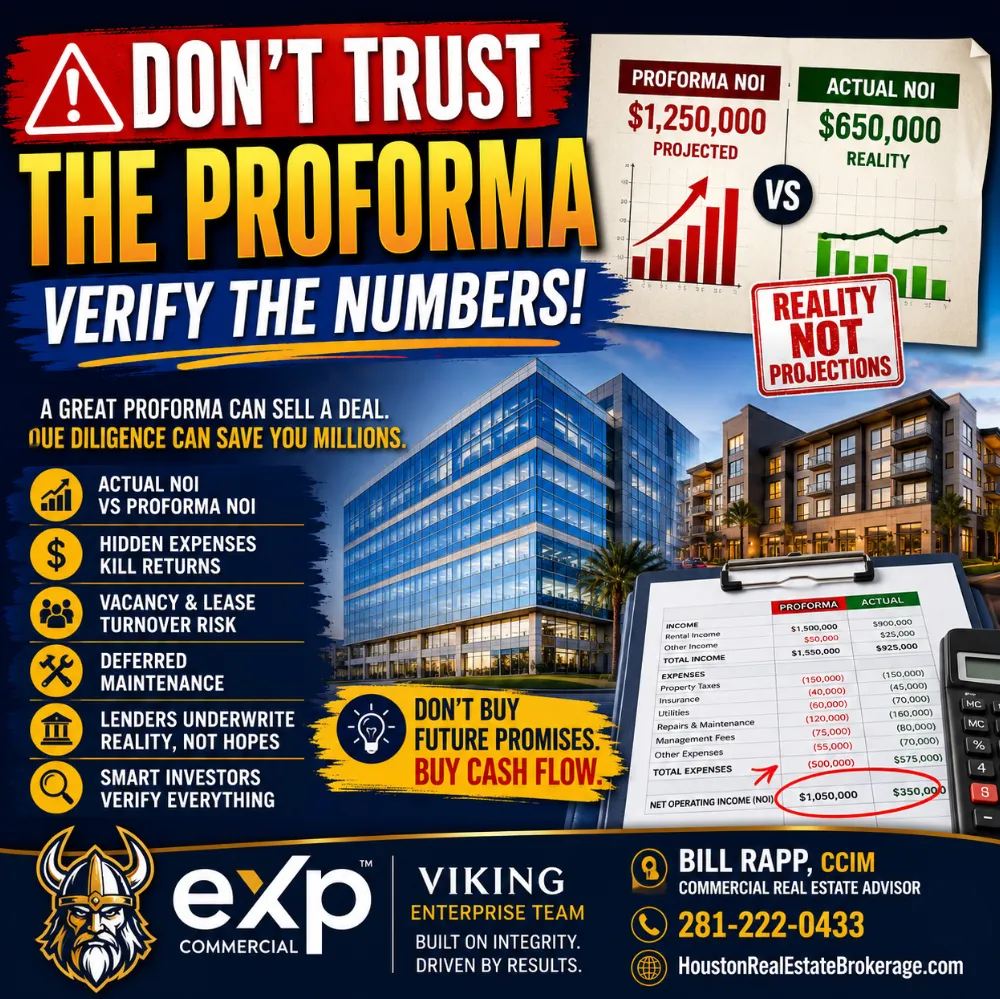
📉 Why Commercial Real Estate Proformas Are Often Misleading (And How Investors Get Burned) 🚨
📉 Why Commercial Real Estate Proformas Are Often Misleading (And How Investors Get Burned) 🚨
💰 The Truth About CRE Proformas: What Sellers Don’t Want Investors to Notice 🏢
Why Proformas Are Often Misleading
Commercial real estate investors love numbers. Cap rates, cash flow, debt service coverage ratios, and internal rates of return all play a role in evaluating investment opportunities. However, one of the most dangerous mistakes new investors make is blindly trusting a property's proforma.
A proforma is simply a projection of future income and expenses. While proformas can be useful planning tools, they are not reality. In many cases, they represent an optimistic version of what a property might achieve rather than what it is currently producing.
Understanding the difference between actual performance and projected performance can save investors hundreds of thousands—or even millions—of dollars.
What Is a Commercial Real Estate Proforma?
A proforma is a financial projection that estimates future property performance based on assumptions.
Typical proforma projections include:
·Future rental income
·Occupancy assumptions
·Expense reductions
·Capital improvements
·Future rent growth
·Future property value
·Net Operating Income (NOI)
The problem is simple:
Proformas are based on assumptions.
And assumptions can be wrong.
The Most Common Proforma Mistakes
1. Unrealistic Rent Growth
Many offering memorandums assume rents will increase dramatically over the next few years.
Questions investors should ask:
·Are comparable properties actually achieving those rents?
·How much tenant demand exists?
·Is new competition entering the market?
·Are economic conditions supporting growth?
A seller's proforma may show rents increasing 10-15%, while the market may only support 2-4%.
2. Underestimated Operating Expenses
One of the most common tricks is understating expenses.
Examples include:
·Property management
·Maintenance
·Repairs
·Insurance
·Property taxes
·Payroll
·Utilities
Even small expense differences can dramatically impact value.
For example:
A $50,000 reduction in NOI at a 6% cap rate equals approximately $833,000 in value.
That's a major difference created by one assumption.
3. Vacancy Assumptions That Are Too Aggressive
Many proformas assume near-perfect occupancy.
Reality is different.
Tenants move out.
Spaces need renovations.
Economic conditions change.
An investor should always evaluate:
·Historical occupancy
·Market occupancy
·Tenant rollover schedules
·Lease expiration risk
4. Deferred Maintenance Is Ignored
Many sellers highlight future upside while minimizing required repairs.
Investors should carefully review:
·Roof condition
·HVAC systems
·Parking lots
·Plumbing
·Electrical systems
·ADA compliance
Future capital expenditures can quickly erase projected returns.
5. Future NOI Is Treated Like Current NOI
Perhaps the most dangerous mistake is paying today's price based on tomorrow's income.
Many brokers market properties using:
"Pro Forma NOI"
instead of
"Actual NOI"
The lender typically underwrites actual performance, not optimistic projections.
That can create financing gaps and unexpected equity requirements.
Why Lenders Don't Trust Proformas
Commercial lenders understand projections can be manipulated.
When evaluating a loan request, lenders typically focus on:
·Historical operating statements
·Current rent roll
·Tax returns
·Bank statements
·Existing leases
·Trailing 12-month operating performance
This is why many buyers discover a lender values a property significantly lower than the seller's asking price.
The lender is underwriting reality.
The seller may be marketing potential.
How Experienced Investors Analyze Proformas
Sophisticated investors verify every assumption.
They review:
Current Rent Roll
What tenants are actually paying today?
Trailing 12-Month Financials (T-12)
What income and expenses occurred during the last year?
Market Comparables
Are projected rents achievable?
Property Condition
What capital improvements will be required?
Financing Structure
Can the projected cash flow support debt payments?
Exit Strategy
What happens if projected growth never materializes?
Experienced investors stress-test every assumption before making an offer.
The Best Question Every Investor Should Ask
Whenever reviewing a commercial property package, ask:
"What is the current NOI and how does it compare to the proforma NOI?"
That single question often reveals whether a deal is truly producing income today or merely selling a future story.
Final Thoughts
Proformas are not inherently bad. They help investors visualize potential and identify value-add opportunities.
However, smart commercial real estate investors understand the difference between potential and performance.
The most successful investors buy based on reality and view upside as a bonus.
If a deal only works under perfect assumptions, it may not be a good deal.
In commercial real estate, actual cash flow pays the bills.
Projections do not.
Before buying, verify every assumption, review the financials, and make decisions based on facts—not forecasts.
Doing so can help you avoid costly mistakes and build long-term wealth through commercial real estate investing.
📞 Bill Rapp, CCIM
eXp Commercial | Viking Enterprise Team
Commercial Real Estate & Capital Advisory
🌐 https://houstonrealestatebrokerage.com
https://www.houstonrealestatebrokerage.com/
https://www.houstonrealestatebrokerage.com/houston-cre-navigator
https://www.commercialexchange.com/agent/653bf5593e3a3e1dcec275a6
http://expressoffers.com/[email protected]
https://app.bullpenre.com/profile/1742476177701x437444415125976000
https://author.billrapponline.com/
https://www.amazon.com/dp/B0F32Z5BH2
https://veed.cello.so/FOmzTty6oi9
https://buymeacoffee.com/vikingente3
https://creplaybookseries.billrapponline.com
https://creplaybook.billrapponline.com/
© Bill Rapp, Broker Associate, eXp Commercial Viking Enterprise Team

eXp Commercial - Viking Enterprise team real estate network provides unparalleled commercial real estate services to Tenants and Landlords around the greater Katy & Houston MSA area. Our knowledge, experience, and reputation sets us apart from many firms.
A commercial property owner might have various plans that would necessitate the services of a commercial real estate broker. Some of the common scenarios include:
1. Selling the Property: If the owner decides it’s time to sell the property, a commercial real estate broker can help determine the market value, market the property effectively, and negotiate with potential buyers to get the best possible price.
2. Leasing Space: For property owners looking to lease out part or all of their commercial space, a broker can help find suitable tenants, negotiate lease terms, and ensure the lease agreements meet all legal requirements and serve the owner’s best interests.
3. Acquiring More Properties: Owners looking to expand their portfolio would benefit from a broker's knowledge of the market, access to listings, and negotiation skills to secure additional properties at favorable terms.
4. Property Management: While not all brokers offer this service, some commercial real estate brokers or their affiliates offer property management services. This can be particularly appealing for owners who prefer a hands-off approach or are managing properties from a distance.
5. Market Analysis: Owners considering future developments, renovations, or rebranding of their property might engage a broker for a comprehensive market analysis. This helps in understanding current market trends, the demand for different types of spaces, and potential returns on investment for various strategies.
6. Refinancing: In situations where a property owner is looking to refinance their property, a commercial real estate broker can provide valuable insights into the property’s current market value, assist in gathering necessary documentation, and even help in finding the best financing options.
7. Partnership or Investment Opportunities: Owners interested in exploring partnerships, joint ventures, or seeking investors for expansion or development projects might use a broker to find and vet potential partners or investors.
8. Consulting on Zoning and Use Changes: When contemplating a change in the use of the property or dealing with zoning issues, a broker with experience in local regulations and the specific property type can provide guidance and strategic planning assistance.
9. Exit Strategy Planning: For owners looking to plan an exit strategy from their investment, whether it’s through a strategic sale or a gradual winding down of operations, brokers can provide market insights, timing advice, and valuation services to optimize the exit process.
In any of these scenarios, the expertise and services provided by a commercial real estate broker can save the property owner time and money, while also providing access to a wider network of potential buyers, tenants, and industry professionals. Give us a call today!


Find the perfect location for your business.
Let us help your business succeed.
📉 Why Commercial Real Estate Proformas Are Often Misleading (And How Investors Get Burned) 🚨
📉 Why Commercial Real Estate Proformas Are Often Misleading (And How Investors Get Burned) 🚨
💰 The Truth About CRE Proformas: What Sellers Don’t Want Investors to Notice 🏢
Why Proformas Are Often Misleading
Commercial real estate investors love numbers. Cap rates, cash flow, debt service coverage ratios, and internal rates of return all play a role in evaluating investment opportunities. However, one of the most dangerous mistakes new investors make is blindly trusting a property's proforma.
A proforma is simply a projection of future income and expenses. While proformas can be useful planning tools, they are not reality. In many cases, they represent an optimistic version of what a property might achieve rather than what it is currently producing.
Understanding the difference between actual performance and projected performance can save investors hundreds of thousands—or even millions—of dollars.
What Is a Commercial Real Estate Proforma?
A proforma is a financial projection that estimates future property performance based on assumptions.
Typical proforma projections include:
·Future rental income
·Occupancy assumptions
·Expense reductions
·Capital improvements
·Future rent growth
·Future property value
·Net Operating Income (NOI)
The problem is simple:
Proformas are based on assumptions.
And assumptions can be wrong.
The Most Common Proforma Mistakes
1. Unrealistic Rent Growth
Many offering memorandums assume rents will increase dramatically over the next few years.
Questions investors should ask:
·Are comparable properties actually achieving those rents?
·How much tenant demand exists?
·Is new competition entering the market?
·Are economic conditions supporting growth?
A seller's proforma may show rents increasing 10-15%, while the market may only support 2-4%.
2. Underestimated Operating Expenses
One of the most common tricks is understating expenses.
Examples include:
·Property management
·Maintenance
·Repairs
·Insurance
·Property taxes
·Payroll
·Utilities
Even small expense differences can dramatically impact value.
For example:
A $50,000 reduction in NOI at a 6% cap rate equals approximately $833,000 in value.
That's a major difference created by one assumption.
3. Vacancy Assumptions That Are Too Aggressive
Many proformas assume near-perfect occupancy.
Reality is different.
Tenants move out.
Spaces need renovations.
Economic conditions change.
An investor should always evaluate:
·Historical occupancy
·Market occupancy
·Tenant rollover schedules
·Lease expiration risk
4. Deferred Maintenance Is Ignored
Many sellers highlight future upside while minimizing required repairs.
Investors should carefully review:
·Roof condition
·HVAC systems
·Parking lots
·Plumbing
·Electrical systems
·ADA compliance
Future capital expenditures can quickly erase projected returns.
5. Future NOI Is Treated Like Current NOI
Perhaps the most dangerous mistake is paying today's price based on tomorrow's income.
Many brokers market properties using:
"Pro Forma NOI"
instead of
"Actual NOI"
The lender typically underwrites actual performance, not optimistic projections.
That can create financing gaps and unexpected equity requirements.
Why Lenders Don't Trust Proformas
Commercial lenders understand projections can be manipulated.
When evaluating a loan request, lenders typically focus on:
·Historical operating statements
·Current rent roll
·Tax returns
·Bank statements
·Existing leases
·Trailing 12-month operating performance
This is why many buyers discover a lender values a property significantly lower than the seller's asking price.
The lender is underwriting reality.
The seller may be marketing potential.
How Experienced Investors Analyze Proformas
Sophisticated investors verify every assumption.
They review:
Current Rent Roll
What tenants are actually paying today?
Trailing 12-Month Financials (T-12)
What income and expenses occurred during the last year?
Market Comparables
Are projected rents achievable?
Property Condition
What capital improvements will be required?
Financing Structure
Can the projected cash flow support debt payments?
Exit Strategy
What happens if projected growth never materializes?
Experienced investors stress-test every assumption before making an offer.
The Best Question Every Investor Should Ask
Whenever reviewing a commercial property package, ask:
"What is the current NOI and how does it compare to the proforma NOI?"
That single question often reveals whether a deal is truly producing income today or merely selling a future story.
Final Thoughts
Proformas are not inherently bad. They help investors visualize potential and identify value-add opportunities.
However, smart commercial real estate investors understand the difference between potential and performance.
The most successful investors buy based on reality and view upside as a bonus.
If a deal only works under perfect assumptions, it may not be a good deal.
In commercial real estate, actual cash flow pays the bills.
Projections do not.
Before buying, verify every assumption, review the financials, and make decisions based on facts—not forecasts.
Doing so can help you avoid costly mistakes and build long-term wealth through commercial real estate investing.
📞 Bill Rapp, CCIM
eXp Commercial | Viking Enterprise Team
Commercial Real Estate & Capital Advisory
🌐 https://houstonrealestatebrokerage.com
https://www.houstonrealestatebrokerage.com/
https://www.houstonrealestatebrokerage.com/houston-cre-navigator
https://www.commercialexchange.com/agent/653bf5593e3a3e1dcec275a6
http://expressoffers.com/[email protected]
https://app.bullpenre.com/profile/1742476177701x437444415125976000
https://author.billrapponline.com/
https://www.amazon.com/dp/B0F32Z5BH2
https://veed.cello.so/FOmzTty6oi9
https://buymeacoffee.com/vikingente3
https://creplaybookseries.billrapponline.com
https://creplaybook.billrapponline.com/
© Bill Rapp, Broker Associate, eXp Commercial Viking Enterprise Team
Find the perfect location for your business.
Let us help your business succeed.

Sign up to receive the latest news on property investment and commercial real estate listings.
9600 Great Hills Trail, Suite 150w Austin, TX 78759 |
855.450.0324 xx255
Texas Real Estate Commission Consumer Protection Notice Texas Real Estate Commission
Information About Brokerage Services eXp Commercial LLC #9010212
Viking Enterprise LLC #9009614

Sign up to receive the latest news on property investment and commercial real estate listings.


Contact Us
901 S Mopac Expwy, Bldg 2, Suite 350 Austin, TX 78746 | 512.474.5557Texas Real Estate Commission
Consumer Protection Notice Texas Real Estate Commission Information About Brokerage Services Reliance Retail, LLC #603091
Texas RS, LLC #9003193 | RESOLUT RE Is Licensed In Louisiana #0995694083
Facebook
Instagram
X
LinkedIn
Youtube
TikTok