Your Trusted Houston Commercial Real Estate Brokerage
Viking Enterprise LLC is part of eXp Commercial, an agent-led, cloud-based commercial real estate brokerage with agents across the globe.
Email: [email protected]
Call: (281) 222-0433
Your Trusted Katy / Fulshear & Houston Commercial Real Estate Brokerage
Viking Enterprise LLC is part of eXp Commercial, an agent-led, cloud-based commercial real estate brokerage with agents across the globe.
Looking to invest, buy, sell or lease? We can help.
Looking to invest, buy, sell or lease? We can help.
FEATURED PROPERTIES




OUR FEATURED TENANTS & CLIENTS
eXp Commercial - Viking Enterprise Team's real estate network provides unparalleled commercial real estate services to Tenants and Landlords around the Katy- Houston area. Our knowledge, experience, and reputation sets us apart from many firms.
A commercial property owner might have various plans that would necessitate the services of a commercial real estate broker. Some of the common scenarios include:
1. Selling the Property: If the owner decides it’s time to sell the property, a commercial real estate broker can help determine the market value, market the property effectively, and negotiate with potential buyers to get the best possible price.
2. Leasing Space: For property owners looking to lease out part or all of their commercial space, a broker can help find suitable tenants, negotiate lease terms, and ensure the lease agreements meet all legal requirements and serve the owner’s best interests.
3. Acquiring More Properties: Owners looking to expand their portfolio would benefit from a broker's knowledge of the market, access to listings, and negotiation skills to secure additional properties at favorable terms.
4. Property Management: While not all brokers offer this service, some commercial real estate brokers or their affiliates offer property management services. This can be particularly appealing for owners who prefer a hands-off approach or are managing properties from a distance.
5. Market Analysis: Owners considering future developments, renovations, or rebranding of their property might engage a broker for a comprehensive market analysis. This helps in understanding current market trends, the demand for different types of spaces, and potential returns on investment for various strategies.
6. Refinancing: In situations where a property owner is looking to refinance their property, a commercial real estate broker can provide valuable insights into the property’s current market value, assist in gathering necessary documentation, and even help in finding the best financing options.
7. Partnership or Investment Opportunities: Owners interested in exploring partnerships, joint ventures, or seeking investors for expansion or development projects might use a broker to find and vet potential partners or investors.
8. Consulting on Zoning and Use Changes: When contemplating a change in the use of the property or dealing with zoning issues, a broker with experience in local regulations and the specific property type can provide guidance and strategic planning assistance.
9. Exit Strategy Planning: For owners looking to plan an exit strategy from their investment, whether it’s through a strategic sale or a gradual winding down of operations, brokers can provide market insights, timing advice, and valuation services to optimize the exit process.
In any of these scenarios, the expertise and services provided by a commercial real estate broker can save the property owner time and money, while also providing access to a wider network of potential buyers, tenants, and industry professionals. Give us a call today!
Reviews
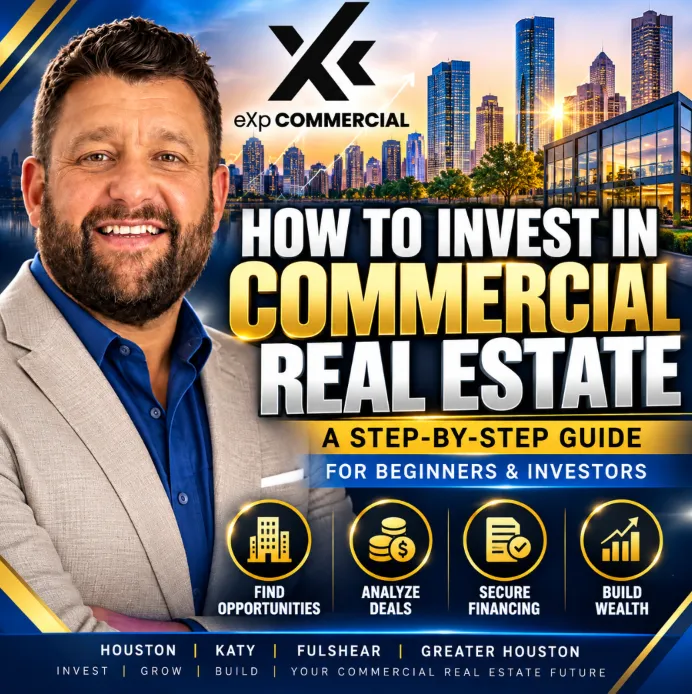
🏢 How to Invest in Commercial Real Estate: A Step-by-Step Guide for Beginners & Investors 📈
🏢 How to Invest in Commercial Real Estate: A Step-by-Step Guide for Beginners & Investors 📈
💰 Commercial Real Estate Investing Explained: How to Build Wealth Through Income-Producing Properties 🏙️
________________________________________________________________________________
🏢 How to Invest in Commercial Real Estate: A Step-by-Step Guide for Beginners & Investors 📈
Commercial real estate investing can be a powerful strategy for building long-term wealth, generating rental income, and diversifying an investment portfolio. But successful investing requires more than purchasing a building and collecting rent.
Whether you're considering your first retail center, office building, industrial warehouse, or multifamily property, understanding the fundamentals of commercial real estate investing can help you identify opportunities, evaluate risks, and make better financial decisions.
For investors exploring Houston, Katy, Fulshear, and the Greater Houston market, local market knowledge, property-level financial analysis, and access to financing are particularly important.
This guide explains how to invest in commercial real estate, from choosing an asset class and evaluating cash flow to securing financing and closing your first transaction.
1. What Is Commercial Real Estate Investing?
Commercial real estate investing involves purchasing property primarily for business use, rental income, investment appreciation, or redevelopment.
Unlike traditional residential investing, commercial properties are frequently valued based on their income-producing potential.
Common commercial real estate investment categories include:
·Retail properties: Shopping centers, neighborhood strip centers, restaurants, and single-tenant retail buildings.
·Office properties: Professional offices, medical offices, and multitenant office buildings.
·Industrial properties: Warehouses, distribution facilities, manufacturing buildings, and flex properties.
·Multifamily properties: Apartment communities, generally five or more residential units for commercial lending purposes.
·Special-purpose properties: Self-storage facilities, hospitality properties, healthcare facilities, and other specialized assets.
·Commercial land: Sites acquired for development, resale, or long-term appreciation.
Each asset class has different operating characteristics, financing considerations, tenant risks, and investment strategies.
Investor takeaway: Choose a property type that aligns with your capital, experience, investment timeline, and tolerance for risk.
2. Why Invest in Commercial Real Estate?
Commercial real estate offers several potential financial advantages.
Rental Income and Cash Flow
Income-producing properties may generate recurring revenue from tenants.
After accounting for operating expenses, debt service, reserves, and capital expenditures, the remaining cash flow may provide an ongoing investment return.
However, positive cash flow is never guaranteed.
Long-Term Property Appreciation
Commercial property values can increase through market growth, improved rental income, renovations, and stronger tenant demand.
Investors may also create value by leasing vacant space, improving operations, or repositioning an underperforming asset.
Portfolio Diversification
Commercial real estate provides exposure to physical assets and property-level income streams that differ from traditional stock and bond investments.
However, real estate is illiquid and can experience significant market fluctuations.
Potential Tax Advantages
Depending on the investor's circumstances, commercial real estate may offer deductions for eligible operating expenses, mortgage interest, and depreciation.
Additional strategies may include cost segregation and qualifying Section 1031 exchanges.
Tax benefits depend on applicable law and individual circumstances. Consult a qualified CPA or tax attorney.
Leverage
Commercial mortgage financing allows investors to control an asset using a combination of equity and borrowed capital.
Leverage can increase returns when investments perform well, but it also magnifies losses and introduces refinancing and default risks.
3. How Much Money Do You Need to Invest in Commercial Real Estate?
One of the most common questions new investors ask is:
How much money do I need to buy commercial real estate?
The answer depends on the property, lender, financing structure, and investment strategy.
For example, an investor purchasing a $1 million income-producing commercial property might evaluate the following illustrative capital structure:
Investment Component | Amount |
Purchase price | $1,000,000 |
Down payment (25%) | $250,000 |
Commercial mortgage (75%) | $750,000 |
Illustrative closing costs (3%) | $30,000 |
Initial improvement/reserve budget | $40,000 |
Estimated initial cash required | $320,000 |
Illustration only. Actual lender requirements, closing costs, reserve requirements, and financing terms vary.
Some investments require substantially more equity, particularly when occupancy is low, the property needs major renovations, or the asset is considered higher risk.
Other opportunities, including real estate investment trusts (REITs) and certain private real estate funds, may allow investors to participate with smaller amounts of capital, although investment minimums, liquidity, and risk vary.
4. Choose the Right Commercial Property Type
Not every commercial property performs the same way.
Retail Real Estate
Retail properties may provide income through neighborhood shopping centers, service-oriented businesses, restaurants, and single-tenant buildings.
Important underwriting considerations include:
·Tenant creditworthiness
·Remaining lease terms
·Lease renewal options
·Co-tenancy provisions
·Traffic counts and visibility
·Tenant improvement costs
·Nearby residential and commercial growth
Industrial Real Estate
Industrial assets include warehouses, logistics facilities, manufacturing buildings, and flex space.
Key considerations include clear heights, loading configuration, truck access, power capacity, yard space, tenant demand, and building functionality.
Office and Medical Office
Office investors should evaluate tenant demand, lease rollover, building condition, operating expenses, and future capital expenditures.
Medical office investments may have specialized infrastructure requirements, higher tenant improvement costs, and unique tenant retention characteristics.
Multifamily Real Estate
Multifamily investments are frequently analyzed using rental income, occupancy, operating expenses, and capital expenditure requirements.
Investors should evaluate rent collections, concessions, insurance, property taxes, maintenance, and local housing supply.
Investor takeaway: Start with an asset class you understand, then build expertise in its financial and operational drivers.
5. Learn How to Analyze Commercial Real Estate Deals
Before purchasing commercial property, investors must understand the financial metrics used to evaluate investment performance.
Net Operating Income (NOI)
NOI measures property income after operating expenses but before debt service, income taxes, depreciation, and amortization.
Formula:
NOI = Effective Gross Income − Operating Expenses
For example:
·Annual effective gross income: $150,000
·Annual operating expenses: $50,000
·Net operating income: $100,000
NOI is one of the most important measurements in commercial real estate underwriting.
Capitalization Rate (Cap Rate)
The capitalization rate compares a property's annual NOI with its purchase price or market value.
Formula:
Cap Rate = NOI ÷ Property Value
Example:
·NOI: $100,000
·Purchase price: $1,250,000
·Cap rate: 8.0%
An 8% cap rate represents an 8% unleveraged annual NOI yield based on the stated purchase price. It does not represent an investor's actual cash return.
Higher cap rates can indicate higher income yields, but they may also reflect greater property or market risk.
Debt Service Coverage Ratio (DSCR)
Lenders frequently use DSCR to evaluate whether a property's income can support its mortgage payments.
Formula:
DSCR = NOI ÷ Annual Debt Service
Example:
·NOI: $100,000
·Annual debt service: $75,000
·DSCR: 1.33x
This means the property generates approximately $1.33 in NOI for every $1.00 of annual debt service.
Lenders establish different minimum DSCR requirements based on the asset, borrower, and financing program.
Cash-on-Cash Return
Cash-on-cash return measures annual pre-tax cash flow relative to the actual cash invested.
Formula:
Cash-on-Cash Return = Annual Pre-Tax Cash Flow ÷ Total Cash Invested
For example:
·Annual pre-tax cash flow: $25,000
·Total cash invested: $320,000
·Cash-on-cash return: 7.81%
This metric is particularly useful when comparing leveraged investments.
6. Understand Commercial Real Estate Financing Options
Financing is one of the most important components of a successful investment strategy.
Different commercial loan programs serve different property types and borrower needs.
Conventional Commercial Mortgages
Banks, credit unions, and other commercial lenders offer financing for stabilized commercial investment properties.
Loan terms depend on borrower strength, collateral quality, cash flow, leverage, and lender policy.
DSCR and Investor Loans
Certain investor loan programs emphasize property-level income and debt service coverage.
Requirements vary significantly by lender, property type, and borrower.
SBA 7(a) and SBA 504 Loans
Eligible business owners purchasing owner-occupied commercial real estate may consider SBA financing.
SBA 7(a) loans offer flexibility for eligible business acquisitions, real estate, equipment, and working capital.
SBA 504 loans generally focus on qualifying major fixed-asset investments.
Important: SBA financing is generally intended for eligible operating businesses, not passive investment-property acquisitions. Occupancy, use-of-proceeds, eligibility, and guaranty requirements apply.
Bridge Loans
Bridge financing can support acquisitions involving property improvements, lease-up, or repositioning.
These loans often have shorter terms and higher financing costs than stabilized permanent mortgages.
Agency Multifamily Financing
Qualifying apartment properties may be eligible for multifamily financing through programs associated with Fannie Mae or Freddie Mac.
Commercial Mortgage Brokerage
A commercial mortgage broker or capital advisor can help investors compare financing structures, lender requirements, debt service, prepayment provisions, and refinancing risks.
Investor takeaway: The lowest quoted interest rate does not necessarily represent the best financing structure.
7. Research the Local Commercial Real Estate Market
Successful investors understand that location influences property performance.
In Greater Houston, submarkets such as Katy, Fulshear, Richmond, the Energy Corridor, and West Houston offer different investment characteristics.
Before selecting a property, evaluate:
·Population and employment trends
·Household income and demographics
·Existing and planned construction
·Tenant demand and market vacancy
·Comparable rents and recent sales
·Transportation access and infrastructure
·Property tax exposure
·Floodplain and drainage conditions
·Local zoning, permitting, and land-use restrictions
For example, a retail investor evaluating the FM 1463 corridor should study nearby residential development, competitive shopping centers, traffic patterns, tenant demand, and projected delivery of new commercial space.
An industrial investor may focus more heavily on highway connectivity, loading functionality, labor availability, and logistics demand.
The best investment is not necessarily the property located in the fastest-growing community. It is the property whose purchase price, income potential, risk profile, and financing align with the investor's objectives.
8. Perform Thorough Due Diligence
Commercial real estate due diligence should extend well beyond the property's appearance.
Before closing, investors should review:
1.Current rent roll and tenant payment history
2.Trailing 12-month operating statement (T-12)
3.Historical financial statements
4.Existing leases, amendments, and guaranties
5.Property taxes and insurance costs
6.Property condition and deferred maintenance
7.Environmental reports, including Phase I assessments where appropriate
8.Survey, title commitment, easements, and restrictions
9.Zoning, permitted use, and applicable building requirements
10.Financing commitments and lender conditions
Additional due diligence may include roof inspections, HVAC evaluations, parking studies, flood-risk assessments, and lease estoppel certificates.
Critical principle: Verify the income, expenses, physical condition, and legal rights you are purchasing.
9. Understand the Risks of Commercial Real Estate Investing
Every commercial real estate investment carries risk.
Vacancy Risk
A vacant property may generate insufficient income to cover operating costs and debt service.
Tenant Credit Risk
A tenant's inability to pay rent can materially reduce investment performance.
Interest Rate and Refinancing Risk
Many commercial loans mature before the underlying amortization schedule ends.
Investors may face a balloon payment, refinancing requirements, or higher borrowing costs at maturity.
Capital Expenditure Risk
Unexpected roof replacements, HVAC repairs, structural problems, or tenant improvements can substantially reduce cash flow.
Market Risk
Changing demographics, oversupply, economic weakness, and declining tenant demand can negatively affect property values.
Liquidity Risk
Commercial real estate can take months to sell, and investors may not be able to exit quickly without accepting a discount.
A disciplined investor stress-tests potential acquisitions for lower rents, vacancy, rising expenses, higher interest rates, and unexpected capital needs.
10. Step-by-Step: How to Buy Your First Commercial Investment Property
Here is a practical acquisition roadmap.
Step 1: Define your investment goals. Decide whether your primary objective is current income, appreciation, redevelopment, or long-term wealth accumulation.
Step 2: Establish your budget. Determine available equity, required reserves, acceptable leverage, and maximum investment exposure.
Step 3: Assemble your advisory team. Work with experienced commercial real estate brokers, lenders, attorneys, CPAs, inspectors, and property managers as appropriate.
Step 4: Identify suitable properties. Search for opportunities that match your asset class, location, return objectives, and risk tolerance.
Step 5: Underwrite the investment. Evaluate NOI, cap rate, DSCR, cash-on-cash return, capital expenditures, lease rollover, and exit assumptions.
Step 6: Evaluate financing. Compare loan structures, rates, amortization, maturity, covenants, fees, and prepayment provisions.
Step 7: Submit an offer or letter of intent. Negotiate pricing, earnest money, inspection periods, financing contingencies, and closing terms.
Step 8: Complete due diligence. Confirm property condition, tenant income, operating expenses, environmental status, title, and financing assumptions.
Step 9: Close the transaction. Finalize financing, legal documents, insurance, and settlement requirements.
Step 10: Execute your asset management strategy. Monitor occupancy, collections, operating costs, capital improvements, and long-term investment performance.
11. Can You Invest in Commercial Real Estate Without Buying a Building?
Yes.
Direct property ownership is only one way to gain commercial real estate exposure.
Alternative structures include:
Real Estate Investment Trusts (REITs): Publicly traded REITs may provide liquid access to diversified real estate portfolios, although share prices can fluctuate. Nontraded REITs generally have more limited liquidity.
Real Estate Syndications: Investors pool capital to acquire properties managed by a sponsor. These arrangements may involve long holding periods, limited liquidity, and significant sponsor and execution risk.
Private Real Estate Funds: Funds invest across multiple properties or strategies, subject to their investment mandates, fees, and eligibility requirements.
Real Estate Partnerships: Investors combine capital, expertise, and operational responsibilities through negotiated ownership structures.
Real Estate Debt Investments: Certain investment vehicles provide exposure to property-backed lending rather than direct equity ownership.
Each structure has distinct risks, fees, tax treatment, investor qualifications, and control rights.
12. Common Mistakes First-Time Commercial Real Estate Investors Should Avoid
Many investment problems begin before closing.
Common mistakes include:
·Buying based on an attractive cap rate without understanding underlying risk.
·Underestimating property taxes, insurance, and maintenance.
·Failing to review actual leases and tenant credit.
·Assuming market rents can be achieved immediately.
·Ignoring lease expiration concentrations.
·Using excessive leverage.
·Failing to maintain sufficient reserves.
·Overlooking environmental, floodplain, or zoning restrictions.
·Underestimating the cost of tenant improvements.
·Failing to establish a realistic exit or refinancing strategy.
Commercial real estate rewards disciplined underwriting, patient decision-making, and careful execution.
13. Why Work With a CCIM Commercial Real Estate Advisor?
Commercial property acquisitions require market knowledge, financial analysis, negotiation skills, and an understanding of investment risk.
The CCIM designation reflects advanced education and demonstrated experience in commercial real estate investment analysis.
Working with a qualified commercial real estate professional can help investors:
·Identify suitable acquisition opportunities
·Compare commercial property types
·Analyze investment performance
·Evaluate local market fundamentals
·Structure purchase offers
·Coordinate due diligence
·Evaluate financing alternatives
·Develop acquisition and disposition strategies
For investors purchasing commercial real estate in Houston, Katy, Fulshear, Richmond, and surrounding communities, combining local market insight with disciplined financial analysis can improve the quality of investment decisions.
Frequently Asked Questions About Commercial Real Estate Investing
Is commercial real estate a good investment for beginners?
It can be appropriate for some beginners, but commercial real estate requires meaningful financial analysis, capital, and risk management. New investors should evaluate their resources, experience, and investment objectives before acquiring property.
What is the best commercial property type for a beginner?
There is no universally best asset class. Some investors prefer smaller multitenant retail or industrial properties, while others prefer passive real estate investments. The right choice depends on capital, experience, local demand, and risk tolerance.
Can I buy commercial property with 10% down?
Certain eligible owner-occupied business financing programs may permit relatively low down payments. Conventional investment-property loans typically require more equity. Eligibility and terms vary.
What is a good cap rate for commercial real estate?
A good cap rate depends on the asset class, location, tenant quality, property condition, financing environment, and investor objectives. Cap rates should be evaluated alongside risk, growth assumptions, and comparable transactions.
Can I use a 1031 exchange to buy commercial real estate?
A qualifying investor may be able to exchange investment or business-use real estate for eligible replacement real estate while deferring certain taxes under Section 1031. Strict identification and closing deadlines apply, and a qualified intermediary is commonly required.
How do commercial real estate investors make money?
Potential returns can come from operating cash flow, property appreciation, principal reduction, and certain tax benefits. Returns are not guaranteed, and losses are possible.
Final Thoughts: Build Wealth Through Smarter Commercial Real Estate Decisions
Learning how to invest in commercial real estate begins with understanding the numbers, selecting the right property type, and developing a disciplined investment strategy.
Whether you're purchasing your first income-producing property, expanding an investment portfolio, completing a 1031 exchange, or exploring commercial property ownership for your business, professional guidance can help you evaluate the available opportunities.
Ready to Explore Commercial Real Estate Investment Opportunities in Houston?
I'm Bill Rapp, CCIM, with eXp Commercial – Viking Enterprise Team.
I work with commercial real estate investors, business owners, developers, and property owners across Houston, Katy, Fulshear, and the surrounding markets.
My approach combines commercial brokerage expertise, investment analysis, and financing knowledge to help clients evaluate acquisitions, dispositions, leasing, and capital strategies.
Let's discuss your commercial real estate investment goals.
Bill Rapp, CCIM
eXp Commercial — Viking Enterprise Team
📍 Serving Katy | Fulshear | Richmond | Brookshire | West Houston | Greater Houston
📧 [email protected]
☎️ 281-222-0433
🌐 HoustonRealEstateBrokerage.com
📍 eXp Commercial & eXp Realty
📅 Calendly.com/VikingEnterprise
https://www.houstonrealestatebrokerage.com/
https://www.houstonrealestatebrokerage.com/houston-cre-navigator
https://www.commercialexchange.com/agent/653bf5593e3a3e1dcec275a6
http://expressoffers.com/[email protected]
https://app.bullpenre.com/profile/1742476177701x437444415125976000
https://author.billrapponline.com/
https://www.amazon.com/dp/B0F32Z5BH2
https://veed.cello.so/FOmzTty6oi9
https://buymeacoffee.com/vikingente3
https://creplaybookseries.billrapponline.com
https://creplaybook.billrapponline.com/
© Bill Rapp, Broker Associate, eXp Commercial Viking Enterprise Team

Commercial Real Estate Advisors Serving Katy, Fulshear & Greater Houston
Helping Property Owners, Investors & Businesses Make Smarter Commercial Real Estate Decisions
Whether you're buying, selling, leasing, investing, or financing commercial real estate, having the right advisor can make all the difference.
At eXp Commercial – Viking Enterprise Team, we provide comprehensive commercial real estate brokerage and advisory services for property owners, investors, developers, landlords, tenants, and business owners throughout Katy, Fulshear, Houston, and the surrounding Texas markets.
Our team combines local market expertise with commercial investment knowledge and capital markets experience to help clients maximize property value, identify new opportunities, reduce risk, and achieve long-term investment success.
From a single office building to a growing investment portfolio, we provide strategic guidance from acquisition through disposition.
Comprehensive Commercial Real Estate Services
Commercial Property Sales
Selling commercial real estate requires far more than placing a property on the market. We develop customized marketing strategies designed to maximize exposure while targeting qualified buyers locally, regionally, and nationally.
Our services include:
Property valuation and pricing strategy
Investment analysis
Professional marketing campaigns
Buyer qualification
Contract negotiation
Due diligence coordination
Transaction management through closing
Whether you're selling office, retail, industrial, multifamily, land, medical, mixed-use, or investment property, our objective is simple—maximize your property's value while creating a smooth transaction.
Commercial Leasing Services
Vacancies reduce cash flow and impact property performance.
We help landlords lease available space by creating effective marketing campaigns, identifying qualified tenants, negotiating favorable lease terms, and minimizing downtime.
Our leasing services include:
Office leasing
Retail leasing
Industrial leasing
Medical office leasing
Flex space leasing
Warehouse leasing
Landlord representation
Tenant representation
Lease renewals
Lease negotiations
Our goal is to keep your property occupied with quality tenants while protecting your long-term investment.
Commercial Property Acquisitions
Whether you're purchasing your first commercial property or expanding a large investment portfolio, we help identify opportunities that align with your investment objectives.
Our acquisition services include:
Market research
Property sourcing
Financial analysis
Cap rate evaluation
Cash flow analysis
Due diligence
Negotiation
Closing coordination
We help investors make informed decisions backed by market data and financial analysis—not emotion.
Investment Property Analysis
Every investment should begin with a thorough understanding of risk and return.
We assist investors by evaluating:
Net Operating Income (NOI)
Capitalization Rates
Cash-on-Cash Returns
Internal Rate of Return (IRR)
Market Rent Analysis
Occupancy Trends
Comparable Sales
Exit Strategies
Our investment analysis helps clients make data-driven decisions before committing capital.
Commercial Financing & Capital Advisory
One of the biggest advantages of working with Viking Enterprise Team is access to commercial financing expertise.
Through our capital markets relationships, we help clients evaluate financing options for acquisitions, refinancing, construction, bridge financing, SBA loans, investment properties, and owner-occupied commercial real estate.
We help clients:
Evaluate financing options
Analyze refinancing opportunities
Improve loan positioning
Understand lender requirements
Coordinate with commercial lenders
Structure financing strategies
Real estate and financing should work together—not independently.
Portfolio Growth & Investment Strategy
Building long-term wealth through commercial real estate requires strategic planning.
We work with investors to:
Expand investment portfolios
Identify off-market opportunities
Improve portfolio performance
Evaluate redevelopment opportunities
Reposition underperforming assets
Develop long-term acquisition strategies
Whether you're purchasing your second investment or your fiftieth, we help create a roadmap for continued growth.
Landlord Representation
Commercial property owners face constant challenges:
Tenant turnover
Lease negotiations
Rental rates
Market competition
Property positioning
We provide landlord representation focused on maximizing occupancy, improving lease terms, increasing property value, and strengthening long-term cash flow.
Tenant Representation
Businesses often outgrow their current space or need a location that better supports future growth.
We represent tenants throughout the site selection process, helping negotiate favorable lease terms while identifying properties that fit operational and financial objectives.
Our tenant services include:
Office space
Retail locations
Industrial facilities
Warehouse space
Medical offices
Flex properties
Build-to-suit opportunities
Market Analysis & Commercial Consulting
Successful commercial real estate decisions begin with accurate market intelligence.
Our advisory services include:
Market studies
Property positioning
Rent analysis
Development feasibility
Redevelopment analysis
Demographic research
Growth corridor identification
Competitive property analysis
Whether you're considering selling today or planning five years ahead, we help you understand where the market is headed.
Joint Ventures & Investment Partnerships
Many commercial opportunities require additional equity, strategic partners, or experienced investors.
We help facilitate introductions between qualified investors, developers, operators, and commercial property owners seeking partnership opportunities for acquisitions, development, redevelopment, or recapitalization.
Exit Planning & Wealth Preservation
Every commercial investment eventually reaches a transition point.
Whether you're considering:
Selling
Refinancing
Recapitalizing
Completing a 1031 Exchange
Passing assets to the next generation
Repositioning your portfolio
we help create an exit strategy that aligns with your financial goals while maximizing value and minimizing unnecessary risk.
Why Choose Viking Enterprise Team?
Commercial real estate is about more than buying and selling properties—it's about creating long-term value.
Our clients benefit from:
Local expertise throughout Katy, Fulshear, Houston, and surrounding markets
Experience representing investors, developers, business owners, landlords, and tenants
Comprehensive brokerage and advisory services
Commercial financing insight and capital markets knowledge
Investment-focused analysis
Strategic negotiation
Professional marketing
Personalized service from initial consultation through closing
We believe informed clients make better decisions, and our role is to provide the expertise, market intelligence, and guidance needed to help you succeed.
Let's Discuss Your Commercial Real Estate Goals
Whether you're buying, selling, leasing, investing, refinancing, or planning your next commercial real estate transaction, Viking Enterprise Team is ready to help.
Schedule a confidential consultation to discuss your objectives and discover how our experience, market knowledge, and strategic approach can help you maximize the value of your commercial real estate investments.
Contact eXp Commercial – Viking Enterprise Team today and let's build your commercial real estate strategy together.


Find the perfect location for your business.
Let us help your business succeed.
🏢 How to Invest in Commercial Real Estate: A Step-by-Step Guide for Beginners & Investors 📈
🏢 How to Invest in Commercial Real Estate: A Step-by-Step Guide for Beginners & Investors 📈
💰 Commercial Real Estate Investing Explained: How to Build Wealth Through Income-Producing Properties 🏙️
________________________________________________________________________________
🏢 How to Invest in Commercial Real Estate: A Step-by-Step Guide for Beginners & Investors 📈
Commercial real estate investing can be a powerful strategy for building long-term wealth, generating rental income, and diversifying an investment portfolio. But successful investing requires more than purchasing a building and collecting rent.
Whether you're considering your first retail center, office building, industrial warehouse, or multifamily property, understanding the fundamentals of commercial real estate investing can help you identify opportunities, evaluate risks, and make better financial decisions.
For investors exploring Houston, Katy, Fulshear, and the Greater Houston market, local market knowledge, property-level financial analysis, and access to financing are particularly important.
This guide explains how to invest in commercial real estate, from choosing an asset class and evaluating cash flow to securing financing and closing your first transaction.
1. What Is Commercial Real Estate Investing?
Commercial real estate investing involves purchasing property primarily for business use, rental income, investment appreciation, or redevelopment.
Unlike traditional residential investing, commercial properties are frequently valued based on their income-producing potential.
Common commercial real estate investment categories include:
·Retail properties: Shopping centers, neighborhood strip centers, restaurants, and single-tenant retail buildings.
·Office properties: Professional offices, medical offices, and multitenant office buildings.
·Industrial properties: Warehouses, distribution facilities, manufacturing buildings, and flex properties.
·Multifamily properties: Apartment communities, generally five or more residential units for commercial lending purposes.
·Special-purpose properties: Self-storage facilities, hospitality properties, healthcare facilities, and other specialized assets.
·Commercial land: Sites acquired for development, resale, or long-term appreciation.
Each asset class has different operating characteristics, financing considerations, tenant risks, and investment strategies.
Investor takeaway: Choose a property type that aligns with your capital, experience, investment timeline, and tolerance for risk.
2. Why Invest in Commercial Real Estate?
Commercial real estate offers several potential financial advantages.
Rental Income and Cash Flow
Income-producing properties may generate recurring revenue from tenants.
After accounting for operating expenses, debt service, reserves, and capital expenditures, the remaining cash flow may provide an ongoing investment return.
However, positive cash flow is never guaranteed.
Long-Term Property Appreciation
Commercial property values can increase through market growth, improved rental income, renovations, and stronger tenant demand.
Investors may also create value by leasing vacant space, improving operations, or repositioning an underperforming asset.
Portfolio Diversification
Commercial real estate provides exposure to physical assets and property-level income streams that differ from traditional stock and bond investments.
However, real estate is illiquid and can experience significant market fluctuations.
Potential Tax Advantages
Depending on the investor's circumstances, commercial real estate may offer deductions for eligible operating expenses, mortgage interest, and depreciation.
Additional strategies may include cost segregation and qualifying Section 1031 exchanges.
Tax benefits depend on applicable law and individual circumstances. Consult a qualified CPA or tax attorney.
Leverage
Commercial mortgage financing allows investors to control an asset using a combination of equity and borrowed capital.
Leverage can increase returns when investments perform well, but it also magnifies losses and introduces refinancing and default risks.
3. How Much Money Do You Need to Invest in Commercial Real Estate?
One of the most common questions new investors ask is:
How much money do I need to buy commercial real estate?
The answer depends on the property, lender, financing structure, and investment strategy.
For example, an investor purchasing a $1 million income-producing commercial property might evaluate the following illustrative capital structure:
Investment Component | Amount |
Purchase price | $1,000,000 |
Down payment (25%) | $250,000 |
Commercial mortgage (75%) | $750,000 |
Illustrative closing costs (3%) | $30,000 |
Initial improvement/reserve budget | $40,000 |
Estimated initial cash required | $320,000 |
Illustration only. Actual lender requirements, closing costs, reserve requirements, and financing terms vary.
Some investments require substantially more equity, particularly when occupancy is low, the property needs major renovations, or the asset is considered higher risk.
Other opportunities, including real estate investment trusts (REITs) and certain private real estate funds, may allow investors to participate with smaller amounts of capital, although investment minimums, liquidity, and risk vary.
4. Choose the Right Commercial Property Type
Not every commercial property performs the same way.
Retail Real Estate
Retail properties may provide income through neighborhood shopping centers, service-oriented businesses, restaurants, and single-tenant buildings.
Important underwriting considerations include:
·Tenant creditworthiness
·Remaining lease terms
·Lease renewal options
·Co-tenancy provisions
·Traffic counts and visibility
·Tenant improvement costs
·Nearby residential and commercial growth
Industrial Real Estate
Industrial assets include warehouses, logistics facilities, manufacturing buildings, and flex space.
Key considerations include clear heights, loading configuration, truck access, power capacity, yard space, tenant demand, and building functionality.
Office and Medical Office
Office investors should evaluate tenant demand, lease rollover, building condition, operating expenses, and future capital expenditures.
Medical office investments may have specialized infrastructure requirements, higher tenant improvement costs, and unique tenant retention characteristics.
Multifamily Real Estate
Multifamily investments are frequently analyzed using rental income, occupancy, operating expenses, and capital expenditure requirements.
Investors should evaluate rent collections, concessions, insurance, property taxes, maintenance, and local housing supply.
Investor takeaway: Start with an asset class you understand, then build expertise in its financial and operational drivers.
5. Learn How to Analyze Commercial Real Estate Deals
Before purchasing commercial property, investors must understand the financial metrics used to evaluate investment performance.
Net Operating Income (NOI)
NOI measures property income after operating expenses but before debt service, income taxes, depreciation, and amortization.
Formula:
NOI = Effective Gross Income − Operating Expenses
For example:
·Annual effective gross income: $150,000
·Annual operating expenses: $50,000
·Net operating income: $100,000
NOI is one of the most important measurements in commercial real estate underwriting.
Capitalization Rate (Cap Rate)
The capitalization rate compares a property's annual NOI with its purchase price or market value.
Formula:
Cap Rate = NOI ÷ Property Value
Example:
·NOI: $100,000
·Purchase price: $1,250,000
·Cap rate: 8.0%
An 8% cap rate represents an 8% unleveraged annual NOI yield based on the stated purchase price. It does not represent an investor's actual cash return.
Higher cap rates can indicate higher income yields, but they may also reflect greater property or market risk.
Debt Service Coverage Ratio (DSCR)
Lenders frequently use DSCR to evaluate whether a property's income can support its mortgage payments.
Formula:
DSCR = NOI ÷ Annual Debt Service
Example:
·NOI: $100,000
·Annual debt service: $75,000
·DSCR: 1.33x
This means the property generates approximately $1.33 in NOI for every $1.00 of annual debt service.
Lenders establish different minimum DSCR requirements based on the asset, borrower, and financing program.
Cash-on-Cash Return
Cash-on-cash return measures annual pre-tax cash flow relative to the actual cash invested.
Formula:
Cash-on-Cash Return = Annual Pre-Tax Cash Flow ÷ Total Cash Invested
For example:
·Annual pre-tax cash flow: $25,000
·Total cash invested: $320,000
·Cash-on-cash return: 7.81%
This metric is particularly useful when comparing leveraged investments.
6. Understand Commercial Real Estate Financing Options
Financing is one of the most important components of a successful investment strategy.
Different commercial loan programs serve different property types and borrower needs.
Conventional Commercial Mortgages
Banks, credit unions, and other commercial lenders offer financing for stabilized commercial investment properties.
Loan terms depend on borrower strength, collateral quality, cash flow, leverage, and lender policy.
DSCR and Investor Loans
Certain investor loan programs emphasize property-level income and debt service coverage.
Requirements vary significantly by lender, property type, and borrower.
SBA 7(a) and SBA 504 Loans
Eligible business owners purchasing owner-occupied commercial real estate may consider SBA financing.
SBA 7(a) loans offer flexibility for eligible business acquisitions, real estate, equipment, and working capital.
SBA 504 loans generally focus on qualifying major fixed-asset investments.
Important: SBA financing is generally intended for eligible operating businesses, not passive investment-property acquisitions. Occupancy, use-of-proceeds, eligibility, and guaranty requirements apply.
Bridge Loans
Bridge financing can support acquisitions involving property improvements, lease-up, or repositioning.
These loans often have shorter terms and higher financing costs than stabilized permanent mortgages.
Agency Multifamily Financing
Qualifying apartment properties may be eligible for multifamily financing through programs associated with Fannie Mae or Freddie Mac.
Commercial Mortgage Brokerage
A commercial mortgage broker or capital advisor can help investors compare financing structures, lender requirements, debt service, prepayment provisions, and refinancing risks.
Investor takeaway: The lowest quoted interest rate does not necessarily represent the best financing structure.
7. Research the Local Commercial Real Estate Market
Successful investors understand that location influences property performance.
In Greater Houston, submarkets such as Katy, Fulshear, Richmond, the Energy Corridor, and West Houston offer different investment characteristics.
Before selecting a property, evaluate:
·Population and employment trends
·Household income and demographics
·Existing and planned construction
·Tenant demand and market vacancy
·Comparable rents and recent sales
·Transportation access and infrastructure
·Property tax exposure
·Floodplain and drainage conditions
·Local zoning, permitting, and land-use restrictions
For example, a retail investor evaluating the FM 1463 corridor should study nearby residential development, competitive shopping centers, traffic patterns, tenant demand, and projected delivery of new commercial space.
An industrial investor may focus more heavily on highway connectivity, loading functionality, labor availability, and logistics demand.
The best investment is not necessarily the property located in the fastest-growing community. It is the property whose purchase price, income potential, risk profile, and financing align with the investor's objectives.
8. Perform Thorough Due Diligence
Commercial real estate due diligence should extend well beyond the property's appearance.
Before closing, investors should review:
1.Current rent roll and tenant payment history
2.Trailing 12-month operating statement (T-12)
3.Historical financial statements
4.Existing leases, amendments, and guaranties
5.Property taxes and insurance costs
6.Property condition and deferred maintenance
7.Environmental reports, including Phase I assessments where appropriate
8.Survey, title commitment, easements, and restrictions
9.Zoning, permitted use, and applicable building requirements
10.Financing commitments and lender conditions
Additional due diligence may include roof inspections, HVAC evaluations, parking studies, flood-risk assessments, and lease estoppel certificates.
Critical principle: Verify the income, expenses, physical condition, and legal rights you are purchasing.
9. Understand the Risks of Commercial Real Estate Investing
Every commercial real estate investment carries risk.
Vacancy Risk
A vacant property may generate insufficient income to cover operating costs and debt service.
Tenant Credit Risk
A tenant's inability to pay rent can materially reduce investment performance.
Interest Rate and Refinancing Risk
Many commercial loans mature before the underlying amortization schedule ends.
Investors may face a balloon payment, refinancing requirements, or higher borrowing costs at maturity.
Capital Expenditure Risk
Unexpected roof replacements, HVAC repairs, structural problems, or tenant improvements can substantially reduce cash flow.
Market Risk
Changing demographics, oversupply, economic weakness, and declining tenant demand can negatively affect property values.
Liquidity Risk
Commercial real estate can take months to sell, and investors may not be able to exit quickly without accepting a discount.
A disciplined investor stress-tests potential acquisitions for lower rents, vacancy, rising expenses, higher interest rates, and unexpected capital needs.
10. Step-by-Step: How to Buy Your First Commercial Investment Property
Here is a practical acquisition roadmap.
Step 1: Define your investment goals. Decide whether your primary objective is current income, appreciation, redevelopment, or long-term wealth accumulation.
Step 2: Establish your budget. Determine available equity, required reserves, acceptable leverage, and maximum investment exposure.
Step 3: Assemble your advisory team. Work with experienced commercial real estate brokers, lenders, attorneys, CPAs, inspectors, and property managers as appropriate.
Step 4: Identify suitable properties. Search for opportunities that match your asset class, location, return objectives, and risk tolerance.
Step 5: Underwrite the investment. Evaluate NOI, cap rate, DSCR, cash-on-cash return, capital expenditures, lease rollover, and exit assumptions.
Step 6: Evaluate financing. Compare loan structures, rates, amortization, maturity, covenants, fees, and prepayment provisions.
Step 7: Submit an offer or letter of intent. Negotiate pricing, earnest money, inspection periods, financing contingencies, and closing terms.
Step 8: Complete due diligence. Confirm property condition, tenant income, operating expenses, environmental status, title, and financing assumptions.
Step 9: Close the transaction. Finalize financing, legal documents, insurance, and settlement requirements.
Step 10: Execute your asset management strategy. Monitor occupancy, collections, operating costs, capital improvements, and long-term investment performance.
11. Can You Invest in Commercial Real Estate Without Buying a Building?
Yes.
Direct property ownership is only one way to gain commercial real estate exposure.
Alternative structures include:
Real Estate Investment Trusts (REITs): Publicly traded REITs may provide liquid access to diversified real estate portfolios, although share prices can fluctuate. Nontraded REITs generally have more limited liquidity.
Real Estate Syndications: Investors pool capital to acquire properties managed by a sponsor. These arrangements may involve long holding periods, limited liquidity, and significant sponsor and execution risk.
Private Real Estate Funds: Funds invest across multiple properties or strategies, subject to their investment mandates, fees, and eligibility requirements.
Real Estate Partnerships: Investors combine capital, expertise, and operational responsibilities through negotiated ownership structures.
Real Estate Debt Investments: Certain investment vehicles provide exposure to property-backed lending rather than direct equity ownership.
Each structure has distinct risks, fees, tax treatment, investor qualifications, and control rights.
12. Common Mistakes First-Time Commercial Real Estate Investors Should Avoid
Many investment problems begin before closing.
Common mistakes include:
·Buying based on an attractive cap rate without understanding underlying risk.
·Underestimating property taxes, insurance, and maintenance.
·Failing to review actual leases and tenant credit.
·Assuming market rents can be achieved immediately.
·Ignoring lease expiration concentrations.
·Using excessive leverage.
·Failing to maintain sufficient reserves.
·Overlooking environmental, floodplain, or zoning restrictions.
·Underestimating the cost of tenant improvements.
·Failing to establish a realistic exit or refinancing strategy.
Commercial real estate rewards disciplined underwriting, patient decision-making, and careful execution.
13. Why Work With a CCIM Commercial Real Estate Advisor?
Commercial property acquisitions require market knowledge, financial analysis, negotiation skills, and an understanding of investment risk.
The CCIM designation reflects advanced education and demonstrated experience in commercial real estate investment analysis.
Working with a qualified commercial real estate professional can help investors:
·Identify suitable acquisition opportunities
·Compare commercial property types
·Analyze investment performance
·Evaluate local market fundamentals
·Structure purchase offers
·Coordinate due diligence
·Evaluate financing alternatives
·Develop acquisition and disposition strategies
For investors purchasing commercial real estate in Houston, Katy, Fulshear, Richmond, and surrounding communities, combining local market insight with disciplined financial analysis can improve the quality of investment decisions.
Frequently Asked Questions About Commercial Real Estate Investing
Is commercial real estate a good investment for beginners?
It can be appropriate for some beginners, but commercial real estate requires meaningful financial analysis, capital, and risk management. New investors should evaluate their resources, experience, and investment objectives before acquiring property.
What is the best commercial property type for a beginner?
There is no universally best asset class. Some investors prefer smaller multitenant retail or industrial properties, while others prefer passive real estate investments. The right choice depends on capital, experience, local demand, and risk tolerance.
Can I buy commercial property with 10% down?
Certain eligible owner-occupied business financing programs may permit relatively low down payments. Conventional investment-property loans typically require more equity. Eligibility and terms vary.
What is a good cap rate for commercial real estate?
A good cap rate depends on the asset class, location, tenant quality, property condition, financing environment, and investor objectives. Cap rates should be evaluated alongside risk, growth assumptions, and comparable transactions.
Can I use a 1031 exchange to buy commercial real estate?
A qualifying investor may be able to exchange investment or business-use real estate for eligible replacement real estate while deferring certain taxes under Section 1031. Strict identification and closing deadlines apply, and a qualified intermediary is commonly required.
How do commercial real estate investors make money?
Potential returns can come from operating cash flow, property appreciation, principal reduction, and certain tax benefits. Returns are not guaranteed, and losses are possible.
Final Thoughts: Build Wealth Through Smarter Commercial Real Estate Decisions
Learning how to invest in commercial real estate begins with understanding the numbers, selecting the right property type, and developing a disciplined investment strategy.
Whether you're purchasing your first income-producing property, expanding an investment portfolio, completing a 1031 exchange, or exploring commercial property ownership for your business, professional guidance can help you evaluate the available opportunities.
Ready to Explore Commercial Real Estate Investment Opportunities in Houston?
I'm Bill Rapp, CCIM, with eXp Commercial – Viking Enterprise Team.
I work with commercial real estate investors, business owners, developers, and property owners across Houston, Katy, Fulshear, and the surrounding markets.
My approach combines commercial brokerage expertise, investment analysis, and financing knowledge to help clients evaluate acquisitions, dispositions, leasing, and capital strategies.
Let's discuss your commercial real estate investment goals.
Bill Rapp, CCIM
eXp Commercial — Viking Enterprise Team
📍 Serving Katy | Fulshear | Richmond | Brookshire | West Houston | Greater Houston
📧 [email protected]
☎️ 281-222-0433
🌐 HoustonRealEstateBrokerage.com
📍 eXp Commercial & eXp Realty
📅 Calendly.com/VikingEnterprise
https://www.houstonrealestatebrokerage.com/
https://www.houstonrealestatebrokerage.com/houston-cre-navigator
https://www.commercialexchange.com/agent/653bf5593e3a3e1dcec275a6
http://expressoffers.com/[email protected]
https://app.bullpenre.com/profile/1742476177701x437444415125976000
https://author.billrapponline.com/
https://www.amazon.com/dp/B0F32Z5BH2
https://veed.cello.so/FOmzTty6oi9
https://buymeacoffee.com/vikingente3
https://creplaybookseries.billrapponline.com
https://creplaybook.billrapponline.com/
© Bill Rapp, Broker Associate, eXp Commercial Viking Enterprise Team
Find the perfect location for your business.
Let us help your business succeed.

Sign up to receive the latest news on property investment and commercial real estate listings.
9600 Great Hills Trail, Suite 150w Austin, TX 78759 |
855.450.0324 xx255
Texas Real Estate Commission Consumer Protection Notice Texas Real Estate Commission
Information About Brokerage Services eXp Commercial LLC #9010212
Viking Enterprise LLC #9009614

Sign up to receive the latest news on property investment and commercial real estate listings.


Contact Us
901 S Mopac Expwy, Bldg 2, Suite 350 Austin, TX 78746 | 512.474.5557Texas Real Estate Commission
Consumer Protection Notice Texas Real Estate Commission Information About Brokerage Services Reliance Retail, LLC #603091
Texas RS, LLC #9003193 | RESOLUT RE Is Licensed In Louisiana #0995694083
Facebook
Instagram
X
LinkedIn
Youtube
TikTok