Your Trusted Houston Commercial Real Estate Brokerage
Viking Enterprise LLC is part of eXp Commercial, an agent-led, cloud-based commercial real estate brokerage with agents across the globe.
Email: [email protected]
Call: (281) 222-0433

Your Trusted Katy / Fulshear & Houston Commercial Real Estate Brokerage
Viking Enterprise LLC is part of eXp Commercial, an agent-led, cloud-based commercial real estate brokerage with agents across the globe.
Looking to invest, buy, sell or lease? We can help.
Looking to invest, buy, sell or lease? We can help.
FEATURED PROPERTIES




OUR FEATURED TENANTS & CLIENTS
eXp Commercial - Viking Enterprise Team's real estate network provides unparalleled commercial real estate services to Tenants and Landlords around the Katy- Houston area. Our knowledge, experience, and reputation sets us apart from many firms.
A commercial property owner might have various plans that would necessitate the services of a commercial real estate broker. Some of the common scenarios include:
1. Selling the Property: If the owner decides it’s time to sell the property, a commercial real estate broker can help determine the market value, market the property effectively, and negotiate with potential buyers to get the best possible price.
2. Leasing Space: For property owners looking to lease out part or all of their commercial space, a broker can help find suitable tenants, negotiate lease terms, and ensure the lease agreements meet all legal requirements and serve the owner’s best interests.
3. Acquiring More Properties: Owners looking to expand their portfolio would benefit from a broker's knowledge of the market, access to listings, and negotiation skills to secure additional properties at favorable terms.
4. Property Management: While not all brokers offer this service, some commercial real estate brokers or their affiliates offer property management services. This can be particularly appealing for owners who prefer a hands-off approach or are managing properties from a distance.
5. Market Analysis: Owners considering future developments, renovations, or rebranding of their property might engage a broker for a comprehensive market analysis. This helps in understanding current market trends, the demand for different types of spaces, and potential returns on investment for various strategies.
6. Refinancing: In situations where a property owner is looking to refinance their property, a commercial real estate broker can provide valuable insights into the property’s current market value, assist in gathering necessary documentation, and even help in finding the best financing options.
7. Partnership or Investment Opportunities: Owners interested in exploring partnerships, joint ventures, or seeking investors for expansion or development projects might use a broker to find and vet potential partners or investors.
8. Consulting on Zoning and Use Changes: When contemplating a change in the use of the property or dealing with zoning issues, a broker with experience in local regulations and the specific property type can provide guidance and strategic planning assistance.
9. Exit Strategy Planning: For owners looking to plan an exit strategy from their investment, whether it’s through a strategic sale or a gradual winding down of operations, brokers can provide market insights, timing advice, and valuation services to optimize the exit process.
In any of these scenarios, the expertise and services provided by a commercial real estate broker can save the property owner time and money, while also providing access to a wider network of potential buyers, tenants, and industry professionals. Give us a call today!
Reviews
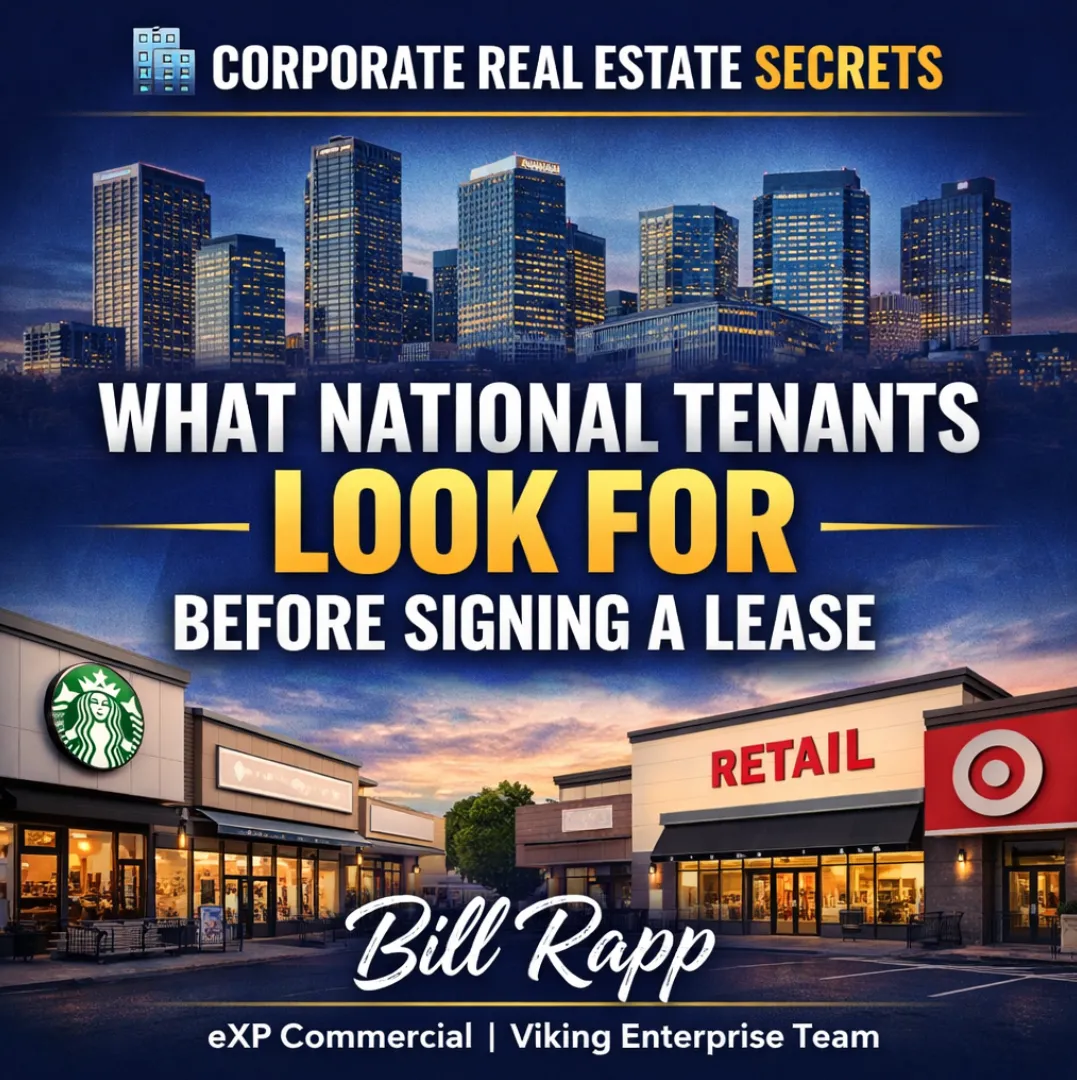
🏢 Corporate Real Estate Secrets: What Credit Tenants Look for Before Signing a Lease 🔍
🏢 Corporate Real Estate Secrets: What Credit Tenants Look for Before Signing a Lease 🔍
💼 How Corporate Tenants Structure Commercial Leases (And What Property Owners Must Know) 📊
Corporate Real Estate Services: Understanding How Credit Tenants Choose Locations and Structure Leases
When major corporations evaluate commercial real estate opportunities, the decision-making process is very different from that of small businesses or local tenants.
Large companies—often called credit tenants—operate through dedicated corporate real estate departments that analyze locations using a disciplined framework focused on long-term strategy, operational efficiency, and financial performance.
Understanding how these corporate real estate teams evaluate properties and structure leases can dramatically improve your ability to attract national tenants and increase the value of your commercial property.
For commercial property owners and investors, this knowledge is essential.
What Is Corporate Real Estate?
Corporate real estate refers to the management of property assets used by large companies to operate their business.
Most major corporations maintain an internal Corporate Real Estate (CRE) department responsible for:
• Site selection
• Lease negotiation
• Portfolio management
• Expansion strategy
• Real estate cost optimization
These departments operate almost like institutional investors, analyzing locations using data-driven models and strict financial criteria.
Their goal is simple:
Secure locations that support the company’s operational strategy while minimizing long-term risk.
What Corporate Credit Tenants Look for in Real Estate
When a corporate tenant evaluates a property, they typically examine several key factors.
1️⃣ Demographics & Market Analytics
Corporate tenants rely heavily on demographic data such as:
• Population growth
• Household income levels
• Traffic counts
• Consumer spending patterns
• Competitive locations nearby
For example, a national restaurant brand evaluating a site in Katy or Fulshear will analyze whether the surrounding population supports its projected revenue targets.
Fast-growing markets—like West Houston and the Grand Parkway corridor—often attract corporate tenants because population expansion creates predictable demand.
2️⃣ Visibility and Accessibility
Corporate site selection teams focus heavily on traffic flow and visibility.
Ideal locations often include:
• Major highway frontage
• High daily traffic counts
• Strong ingress and egress access
• Nearby retail anchors
Properties located along I-10, Grand Parkway, and FM 1463 frequently attract national brands because they provide strong visibility and easy customer access.
3️⃣ Co-Tenancy and Retail Synergy
Corporate tenants also evaluate what other businesses operate nearby.
Retail clusters create stronger sales environments.
For example, corporate tenants often look for adjacency to:
• Grocery stores
• National retailers
• Entertainment venues
• Medical centers
This is why many national brands prefer locations within mixed-use developments or established retail corridors.
How Corporate Tenants Structure Commercial Leases
Corporate tenants structure leases in a way that provides long-term operational stability while maintaining flexibility.
Several lease structures are common.
Triple Net (NNN) Lease Structures
Most corporate tenants prefer triple-net leases.
In a NNN lease, the tenant pays:
• Property taxes
• Insurance
• Maintenance expenses
This structure allows the landlord to receive predictable income with limited operational responsibilities.
For investors, NNN leases with corporate tenants often command lower cap rates because of their stability.
Long-Term Lease Commitments
Corporate tenants frequently sign leases ranging from:
• 10 years
• 15 years
• 20 years
Longer lease terms provide stability for both parties.
These leases often include extension options, allowing the tenant to renew the space multiple times.
Rent Escalation Clauses
Corporate leases typically include structured rent increases.
Common escalation structures include:
• 10% increases every five years
• 2–3% annual increases
• CPI-based adjustments
These increases help property owners maintain income growth while preserving the long-term value of the property.
Tenant Improvement Allowances
Corporate tenants may request tenant improvement (TI) allowances to customize the space.
These allowances help fund:
• Build-outs
• Restaurant kitchens
• Retail interior finishes
• Medical office infrastructure
In many cases, landlords recover these costs through higher rental rates over time.
The Corporate Site Selection Process
Corporate real estate teams typically follow a structured evaluation process.
Step 1: Market Analysis
Corporate analysts evaluate:
• regional population trends
• economic growth
• labor availability
• competition
Houston continues to attract corporate tenants because of its population growth and strong business environment.
Step 2: Site Identification
Real estate brokers and corporate teams identify several potential sites that meet the company's operational requirements.
These locations are then analyzed for:
• zoning
• parking ratios
• access points
• infrastructure availability
Step 3: Financial Modeling
Corporate tenants run detailed financial models projecting:
• expected revenue
• lease costs
• build-out expenses
• operational margins
This process determines whether a location meets the company’s return requirements.
Step 4: Lease Negotiation
Once a location is approved internally, the corporate team begins negotiating lease terms.
This phase often involves:
• rent structure
• tenant improvements
• lease duration
• exclusivity provisions
Experienced commercial brokers play a critical role during this stage.
Our Corporate Real Estate Advisory Process
At Houston Real Estate Brokerage, our process is designed to align with how corporate tenants evaluate properties.
This allows property owners to position their assets in a way that attracts creditworthy tenants and institutional buyers.
Our process includes:
Market Positioning
We analyze the property’s location within the broader market and identify which types of tenants are most likely to succeed at that site.
Tenant Targeting
We identify national brands and corporate tenants actively expanding in the market and present the property directly to their site selection teams.
Lease Structuring
We structure lease terms that align with corporate standards while protecting the landlord’s financial interests.
Investment Optimization
Once a credit tenant is secured, the property may become significantly more valuable to investors.
Properties with long-term corporate leases often trade at lower cap rates, increasing the overall sale price.
Why Corporate Tenants Increase Property Value
From an investor’s perspective, corporate tenants dramatically reduce risk.
Key benefits include:
• long-term leases
• predictable income streams
• stronger financing options
• higher resale values
For many investors, credit-tenant properties function almost like bond-like investments within commercial real estate portfolios.
Final Thoughts
Understanding how corporate real estate departments operate gives property owners a powerful advantage.
When landlords structure their properties and leases in a way that aligns with corporate standards, they dramatically improve their ability to attract national tenants and long-term investment capital.
For investors and business owners in Houston, Katy, and Fulshear, the continued population growth and economic expansion of the region create a compelling environment for corporate tenants seeking new locations.
Those who understand how corporate real estate teams think will be best positioned to benefit from these opportunities.
📧 [email protected]
📞 281-222-0433
🔗 https://HoustonRealEstateBrokerage.com
https://www.houstonrealestatebrokerage.com/
https://www.houstonrealestatebrokerage.com/houston-cre-navigator
https://www.commercialexchange.com/agent/653bf5593e3a3e1dcec275a6
http://expressoffers.com/[email protected]
https://app.bullpenre.com/profile/1742476177701x437444415125976000
https://author.billrapponline.com/
https://www.amazon.com/dp/B0F32Z5BH2
https://veed.cello.so/FOmzTty6oi9
https://buymeacoffee.com/vikingente3
https://creplaybookseries.billrapponline.com
https://creplaybook.billrapponline.com/
© 2023-2024 Bill Rapp, Broker Associate, eXp Commercial Viking Enterprise Team

eXp Commercial - Viking Enterprise team real estate network provides unparalleled commercial real estate services to Tenants and Landlords around the greater Katy & Houston MSA area. Our knowledge, experience, and reputation sets us apart from many firms.
A commercial property owner might have various plans that would necessitate the services of a commercial real estate broker. Some of the common scenarios include:
1. Selling the Property: If the owner decides it’s time to sell the property, a commercial real estate broker can help determine the market value, market the property effectively, and negotiate with potential buyers to get the best possible price.
2. Leasing Space: For property owners looking to lease out part or all of their commercial space, a broker can help find suitable tenants, negotiate lease terms, and ensure the lease agreements meet all legal requirements and serve the owner’s best interests.
3. Acquiring More Properties: Owners looking to expand their portfolio would benefit from a broker's knowledge of the market, access to listings, and negotiation skills to secure additional properties at favorable terms.
4. Property Management: While not all brokers offer this service, some commercial real estate brokers or their affiliates offer property management services. This can be particularly appealing for owners who prefer a hands-off approach or are managing properties from a distance.
5. Market Analysis: Owners considering future developments, renovations, or rebranding of their property might engage a broker for a comprehensive market analysis. This helps in understanding current market trends, the demand for different types of spaces, and potential returns on investment for various strategies.
6. Refinancing: In situations where a property owner is looking to refinance their property, a commercial real estate broker can provide valuable insights into the property’s current market value, assist in gathering necessary documentation, and even help in finding the best financing options.
7. Partnership or Investment Opportunities: Owners interested in exploring partnerships, joint ventures, or seeking investors for expansion or development projects might use a broker to find and vet potential partners or investors.
8. Consulting on Zoning and Use Changes: When contemplating a change in the use of the property or dealing with zoning issues, a broker with experience in local regulations and the specific property type can provide guidance and strategic planning assistance.
9. Exit Strategy Planning: For owners looking to plan an exit strategy from their investment, whether it’s through a strategic sale or a gradual winding down of operations, brokers can provide market insights, timing advice, and valuation services to optimize the exit process.
In any of these scenarios, the expertise and services provided by a commercial real estate broker can save the property owner time and money, while also providing access to a wider network of potential buyers, tenants, and industry professionals. Give us a call today!

Find the perfect location for your business.
Let us help your business succeed.
🏢 Corporate Real Estate Secrets: What Credit Tenants Look for Before Signing a Lease 🔍
🏢 Corporate Real Estate Secrets: What Credit Tenants Look for Before Signing a Lease 🔍
💼 How Corporate Tenants Structure Commercial Leases (And What Property Owners Must Know) 📊
Corporate Real Estate Services: Understanding How Credit Tenants Choose Locations and Structure Leases
When major corporations evaluate commercial real estate opportunities, the decision-making process is very different from that of small businesses or local tenants.
Large companies—often called credit tenants—operate through dedicated corporate real estate departments that analyze locations using a disciplined framework focused on long-term strategy, operational efficiency, and financial performance.
Understanding how these corporate real estate teams evaluate properties and structure leases can dramatically improve your ability to attract national tenants and increase the value of your commercial property.
For commercial property owners and investors, this knowledge is essential.
What Is Corporate Real Estate?
Corporate real estate refers to the management of property assets used by large companies to operate their business.
Most major corporations maintain an internal Corporate Real Estate (CRE) department responsible for:
• Site selection
• Lease negotiation
• Portfolio management
• Expansion strategy
• Real estate cost optimization
These departments operate almost like institutional investors, analyzing locations using data-driven models and strict financial criteria.
Their goal is simple:
Secure locations that support the company’s operational strategy while minimizing long-term risk.
What Corporate Credit Tenants Look for in Real Estate
When a corporate tenant evaluates a property, they typically examine several key factors.
1️⃣ Demographics & Market Analytics
Corporate tenants rely heavily on demographic data such as:
• Population growth
• Household income levels
• Traffic counts
• Consumer spending patterns
• Competitive locations nearby
For example, a national restaurant brand evaluating a site in Katy or Fulshear will analyze whether the surrounding population supports its projected revenue targets.
Fast-growing markets—like West Houston and the Grand Parkway corridor—often attract corporate tenants because population expansion creates predictable demand.
2️⃣ Visibility and Accessibility
Corporate site selection teams focus heavily on traffic flow and visibility.
Ideal locations often include:
• Major highway frontage
• High daily traffic counts
• Strong ingress and egress access
• Nearby retail anchors
Properties located along I-10, Grand Parkway, and FM 1463 frequently attract national brands because they provide strong visibility and easy customer access.
3️⃣ Co-Tenancy and Retail Synergy
Corporate tenants also evaluate what other businesses operate nearby.
Retail clusters create stronger sales environments.
For example, corporate tenants often look for adjacency to:
• Grocery stores
• National retailers
• Entertainment venues
• Medical centers
This is why many national brands prefer locations within mixed-use developments or established retail corridors.
How Corporate Tenants Structure Commercial Leases
Corporate tenants structure leases in a way that provides long-term operational stability while maintaining flexibility.
Several lease structures are common.
Triple Net (NNN) Lease Structures
Most corporate tenants prefer triple-net leases.
In a NNN lease, the tenant pays:
• Property taxes
• Insurance
• Maintenance expenses
This structure allows the landlord to receive predictable income with limited operational responsibilities.
For investors, NNN leases with corporate tenants often command lower cap rates because of their stability.
Long-Term Lease Commitments
Corporate tenants frequently sign leases ranging from:
• 10 years
• 15 years
• 20 years
Longer lease terms provide stability for both parties.
These leases often include extension options, allowing the tenant to renew the space multiple times.
Rent Escalation Clauses
Corporate leases typically include structured rent increases.
Common escalation structures include:
• 10% increases every five years
• 2–3% annual increases
• CPI-based adjustments
These increases help property owners maintain income growth while preserving the long-term value of the property.
Tenant Improvement Allowances
Corporate tenants may request tenant improvement (TI) allowances to customize the space.
These allowances help fund:
• Build-outs
• Restaurant kitchens
• Retail interior finishes
• Medical office infrastructure
In many cases, landlords recover these costs through higher rental rates over time.
The Corporate Site Selection Process
Corporate real estate teams typically follow a structured evaluation process.
Step 1: Market Analysis
Corporate analysts evaluate:
• regional population trends
• economic growth
• labor availability
• competition
Houston continues to attract corporate tenants because of its population growth and strong business environment.
Step 2: Site Identification
Real estate brokers and corporate teams identify several potential sites that meet the company's operational requirements.
These locations are then analyzed for:
• zoning
• parking ratios
• access points
• infrastructure availability
Step 3: Financial Modeling
Corporate tenants run detailed financial models projecting:
• expected revenue
• lease costs
• build-out expenses
• operational margins
This process determines whether a location meets the company’s return requirements.
Step 4: Lease Negotiation
Once a location is approved internally, the corporate team begins negotiating lease terms.
This phase often involves:
• rent structure
• tenant improvements
• lease duration
• exclusivity provisions
Experienced commercial brokers play a critical role during this stage.
Our Corporate Real Estate Advisory Process
At Houston Real Estate Brokerage, our process is designed to align with how corporate tenants evaluate properties.
This allows property owners to position their assets in a way that attracts creditworthy tenants and institutional buyers.
Our process includes:
Market Positioning
We analyze the property’s location within the broader market and identify which types of tenants are most likely to succeed at that site.
Tenant Targeting
We identify national brands and corporate tenants actively expanding in the market and present the property directly to their site selection teams.
Lease Structuring
We structure lease terms that align with corporate standards while protecting the landlord’s financial interests.
Investment Optimization
Once a credit tenant is secured, the property may become significantly more valuable to investors.
Properties with long-term corporate leases often trade at lower cap rates, increasing the overall sale price.
Why Corporate Tenants Increase Property Value
From an investor’s perspective, corporate tenants dramatically reduce risk.
Key benefits include:
• long-term leases
• predictable income streams
• stronger financing options
• higher resale values
For many investors, credit-tenant properties function almost like bond-like investments within commercial real estate portfolios.
Final Thoughts
Understanding how corporate real estate departments operate gives property owners a powerful advantage.
When landlords structure their properties and leases in a way that aligns with corporate standards, they dramatically improve their ability to attract national tenants and long-term investment capital.
For investors and business owners in Houston, Katy, and Fulshear, the continued population growth and economic expansion of the region create a compelling environment for corporate tenants seeking new locations.
Those who understand how corporate real estate teams think will be best positioned to benefit from these opportunities.
📧 [email protected]
📞 281-222-0433
🔗 https://HoustonRealEstateBrokerage.com
https://www.houstonrealestatebrokerage.com/
https://www.houstonrealestatebrokerage.com/houston-cre-navigator
https://www.commercialexchange.com/agent/653bf5593e3a3e1dcec275a6
http://expressoffers.com/[email protected]
https://app.bullpenre.com/profile/1742476177701x437444415125976000
https://author.billrapponline.com/
https://www.amazon.com/dp/B0F32Z5BH2
https://veed.cello.so/FOmzTty6oi9
https://buymeacoffee.com/vikingente3
https://creplaybookseries.billrapponline.com
https://creplaybook.billrapponline.com/
© 2023-2024 Bill Rapp, Broker Associate, eXp Commercial Viking Enterprise Team
Find the perfect location for your business.
Let us help your business succeed.
Sign up to receive the latest news on property investment and commercial real estate listings.
9600 Great Hills Trail, Suite 150w Austin, TX 78759 |
855.450.0324 xx255
Texas Real Estate Commission Consumer Protection Notice Texas Real Estate Commission
Information About Brokerage Services eXp Commercial LLC #9010212
Viking Enterprise LLC #9009614

Sign up to receive the latest news on property investment and commercial real estate listings.


Contact Us
901 S Mopac Expwy, Bldg 2, Suite 350 Austin, TX 78746 | 512.474.5557Texas Real Estate Commission
Consumer Protection Notice Texas Real Estate Commission Information About Brokerage Services Reliance Retail, LLC #603091
Texas RS, LLC #9003193 | RESOLUT RE Is Licensed In Louisiana #0995694083
Facebook
Instagram
X
LinkedIn
Youtube
TikTok