Your Trusted Houston Commercial Real Estate Brokerage
Viking Enterprise LLC is part of eXp Commercial, an agent-led, cloud-based commercial real estate brokerage with agents across the globe.
Email: [email protected]
Call: (281) 222-0433

Your Trusted Katy / Fulshear & Houston Commercial Real Estate Brokerage
Viking Enterprise LLC is part of eXp Commercial, an agent-led, cloud-based commercial real estate brokerage with agents across the globe.
Looking to invest, buy, sell or lease? We can help.
Looking to invest, buy, sell or lease? We can help.
FEATURED PROPERTIES




OUR FEATURED TENANTS & CLIENTS
eXp Commercial - Viking Enterprise Team's real estate network provides unparalleled commercial real estate services to Tenants and Landlords around the Katy- Houston area. Our knowledge, experience, and reputation sets us apart from many firms.
A commercial property owner might have various plans that would necessitate the services of a commercial real estate broker. Some of the common scenarios include:
1. Selling the Property: If the owner decides it’s time to sell the property, a commercial real estate broker can help determine the market value, market the property effectively, and negotiate with potential buyers to get the best possible price.
2. Leasing Space: For property owners looking to lease out part or all of their commercial space, a broker can help find suitable tenants, negotiate lease terms, and ensure the lease agreements meet all legal requirements and serve the owner’s best interests.
3. Acquiring More Properties: Owners looking to expand their portfolio would benefit from a broker's knowledge of the market, access to listings, and negotiation skills to secure additional properties at favorable terms.
4. Property Management: While not all brokers offer this service, some commercial real estate brokers or their affiliates offer property management services. This can be particularly appealing for owners who prefer a hands-off approach or are managing properties from a distance.
5. Market Analysis: Owners considering future developments, renovations, or rebranding of their property might engage a broker for a comprehensive market analysis. This helps in understanding current market trends, the demand for different types of spaces, and potential returns on investment for various strategies.
6. Refinancing: In situations where a property owner is looking to refinance their property, a commercial real estate broker can provide valuable insights into the property’s current market value, assist in gathering necessary documentation, and even help in finding the best financing options.
7. Partnership or Investment Opportunities: Owners interested in exploring partnerships, joint ventures, or seeking investors for expansion or development projects might use a broker to find and vet potential partners or investors.
8. Consulting on Zoning and Use Changes: When contemplating a change in the use of the property or dealing with zoning issues, a broker with experience in local regulations and the specific property type can provide guidance and strategic planning assistance.
9. Exit Strategy Planning: For owners looking to plan an exit strategy from their investment, whether it’s through a strategic sale or a gradual winding down of operations, brokers can provide market insights, timing advice, and valuation services to optimize the exit process.
In any of these scenarios, the expertise and services provided by a commercial real estate broker can save the property owner time and money, while also providing access to a wider network of potential buyers, tenants, and industry professionals. Give us a call today!
Reviews
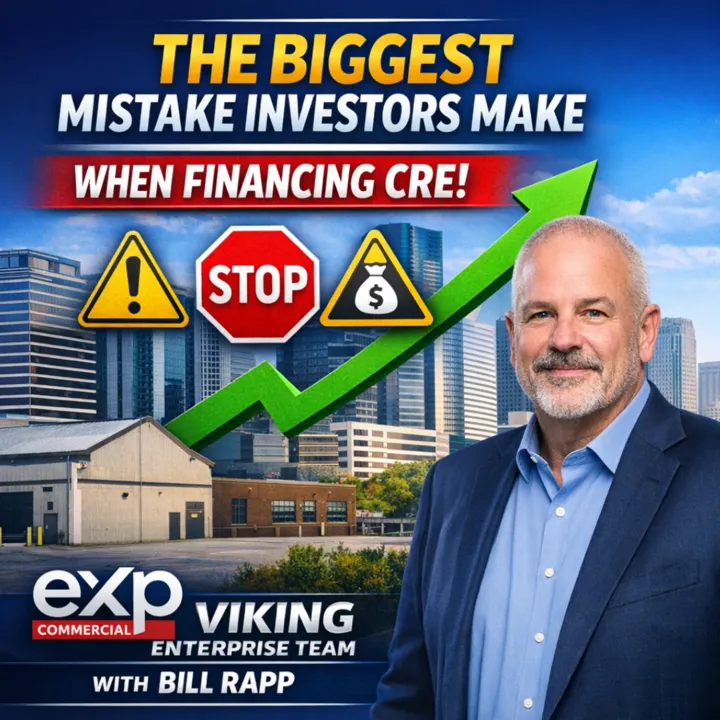
🏢 The Biggest Mistake Investors Make When Financing CRE 💰
🏢 The Biggest Mistake Investors Make When Financing CRE 💰
💸 Why Most CRE Investors Get Financing Wrong (And How Smart Investors Avoid It) 🏢
The Biggest Mistake Investors Make When Financing Commercial Real Estate
Many commercial real estate investors spend weeks negotiating the purchase price of a property.
But surprisingly, they often spend almost no time negotiating the loan structure.
That’s the biggest mistake investors make when financing commercial real estate.
While price matters, the financing structure often determines whether a deal succeeds or fails.
Smart investors understand something many beginners miss:
The loan structure matters more than the interest rate.
Understanding this principle can dramatically improve returns, reduce risk, and increase the probability that a deal closes successfully.
Why Financing Structure Matters More Than Interest Rate
Most investors instinctively focus on getting the lowest interest rate possible.
But experienced investors know that structure drives flexibility.
A slightly higher interest rate with the right structure may provide:
• Interest-only periods
• Higher loan proceeds
• Flexible prepayment terms
• Longer amortization
• Better refinancing options
These factors can dramatically impact cash flow and long-term returns.
For example:
A loan with a 0.75% higher rate but 3 years of interest-only payments may produce significantly better early cash flow than a cheaper loan with full amortization.
In commercial real estate, cash flow flexibility is often more valuable than rate savings.
How Financing Structure Impacts Investment Performance
Several loan variables shape investment performance.
1️⃣ Loan-to-Value (LTV)
Higher leverage allows investors to:
• Preserve capital
• Increase return on equity
• Scale portfolio growth
But excessive leverage increases risk, so balance is key.
2️⃣ Debt Service Coverage Ratio (DSCR)
Lenders evaluate how well property income supports loan payments.
A stronger DSCR may unlock:
• Better loan terms
• Lower interest rates
• Higher loan proceeds
Investors who plan for DSCR early avoid financing problems later.
3️⃣ Amortization Period
Longer amortization periods reduce monthly payments.
Typical options include:
• 20-year amortization
• 25-year amortization
• 30-year amortization
Lower payments increase cash flow stability, which can improve investor returns.
4️⃣ Interest-Only Periods
Interest-only periods allow investors to:
• Stabilize properties
• Renovate assets
• Increase occupancy
• Improve net operating income
These periods can dramatically enhance early investment performance.
5️⃣ Prepayment Flexibility
Many CRE loans include penalties such as:
• Yield maintenance
• Defeasance
• Step-down penalties
If investors plan to refinance or sell early, these penalties can significantly affect profitability.
Understanding exit flexibility is critical when structuring CRE loans.
Why Many Investors Make This Financing Mistake
There are three common reasons.
1️⃣ Investors Focus Too Much on Price
Negotiating the purchase price feels tangible.
Loan structure is more technical, so it often gets overlooked.
2️⃣ Investors Shop Rate Instead of Strategy
Many borrowers simply ask:
“What’s your rate?”
Professional investors ask different questions:
• What loan structure best fits the business plan?
• What is the refinance strategy?
• What exit timeline should the loan match?
3️⃣ Financing Is Considered Too Late
Many investors wait until after they have a property under contract to think about financing.
By then, options are limited.
Smart investors evaluate financing before making an offer.
The Professional Investor Mindset
Experienced commercial real estate investors approach financing strategically.
They ask questions like:
• What is the ideal hold period?
• Will the property require stabilization?
• Should the loan allow early refinancing?
• Does the structure support value-add improvements?
By aligning the loan structure with the investment plan, investors reduce risk and maximize returns.
The Bottom Line
Commercial real estate success is rarely determined by purchase price alone.
More often, success is determined by how the deal is financed.
Investors who focus solely on interest rate often overlook the most important factor:
Loan structure determines flexibility, risk, and profitability.
Understanding this principle can help investors make better decisions, avoid costly mistakes, and build stronger portfolios over time.
📍 Serving Investors in Katy, Fulshear, and Greater Houston
If you're evaluating a commercial real estate acquisition or refinance strategy, it’s critical to structure the financing correctly from the beginning.
📧 [email protected]
📞 281-222-0433
🔗 https://HoustonRealEstateBrokerage.com
https://www.houstonrealestatebrokerage.com/
https://www.houstonrealestatebrokerage.com/houston-cre-navigator
https://www.commercialexchange.com/agent/653bf5593e3a3e1dcec275a6
http://expressoffers.com/[email protected]
https://app.bullpenre.com/profile/1742476177701x437444415125976000
https://author.billrapponline.com/
https://www.amazon.com/dp/B0F32Z5BH2
https://veed.cello.so/FOmzTty6oi9
https://buymeacoffee.com/vikingente3
https://creplaybookseries.billrapponline.com
https://creplaybook.billrapponline.com/
© 2023-2024 Bill Rapp, Broker Associate, eXp Commercial Viking Enterprise Team

eXp Commercial - Viking Enterprise team real estate network provides unparalleled commercial real estate services to Tenants and Landlords around the greater Katy & Houston MSA area. Our knowledge, experience, and reputation sets us apart from many firms.
A commercial property owner might have various plans that would necessitate the services of a commercial real estate broker. Some of the common scenarios include:
1. Selling the Property: If the owner decides it’s time to sell the property, a commercial real estate broker can help determine the market value, market the property effectively, and negotiate with potential buyers to get the best possible price.
2. Leasing Space: For property owners looking to lease out part or all of their commercial space, a broker can help find suitable tenants, negotiate lease terms, and ensure the lease agreements meet all legal requirements and serve the owner’s best interests.
3. Acquiring More Properties: Owners looking to expand their portfolio would benefit from a broker's knowledge of the market, access to listings, and negotiation skills to secure additional properties at favorable terms.
4. Property Management: While not all brokers offer this service, some commercial real estate brokers or their affiliates offer property management services. This can be particularly appealing for owners who prefer a hands-off approach or are managing properties from a distance.
5. Market Analysis: Owners considering future developments, renovations, or rebranding of their property might engage a broker for a comprehensive market analysis. This helps in understanding current market trends, the demand for different types of spaces, and potential returns on investment for various strategies.
6. Refinancing: In situations where a property owner is looking to refinance their property, a commercial real estate broker can provide valuable insights into the property’s current market value, assist in gathering necessary documentation, and even help in finding the best financing options.
7. Partnership or Investment Opportunities: Owners interested in exploring partnerships, joint ventures, or seeking investors for expansion or development projects might use a broker to find and vet potential partners or investors.
8. Consulting on Zoning and Use Changes: When contemplating a change in the use of the property or dealing with zoning issues, a broker with experience in local regulations and the specific property type can provide guidance and strategic planning assistance.
9. Exit Strategy Planning: For owners looking to plan an exit strategy from their investment, whether it’s through a strategic sale or a gradual winding down of operations, brokers can provide market insights, timing advice, and valuation services to optimize the exit process.
In any of these scenarios, the expertise and services provided by a commercial real estate broker can save the property owner time and money, while also providing access to a wider network of potential buyers, tenants, and industry professionals. Give us a call today!

Find the perfect location for your business.
Let us help your business succeed.
🏢 The Biggest Mistake Investors Make When Financing CRE 💰
🏢 The Biggest Mistake Investors Make When Financing CRE 💰
💸 Why Most CRE Investors Get Financing Wrong (And How Smart Investors Avoid It) 🏢
The Biggest Mistake Investors Make When Financing Commercial Real Estate
Many commercial real estate investors spend weeks negotiating the purchase price of a property.
But surprisingly, they often spend almost no time negotiating the loan structure.
That’s the biggest mistake investors make when financing commercial real estate.
While price matters, the financing structure often determines whether a deal succeeds or fails.
Smart investors understand something many beginners miss:
The loan structure matters more than the interest rate.
Understanding this principle can dramatically improve returns, reduce risk, and increase the probability that a deal closes successfully.
Why Financing Structure Matters More Than Interest Rate
Most investors instinctively focus on getting the lowest interest rate possible.
But experienced investors know that structure drives flexibility.
A slightly higher interest rate with the right structure may provide:
• Interest-only periods
• Higher loan proceeds
• Flexible prepayment terms
• Longer amortization
• Better refinancing options
These factors can dramatically impact cash flow and long-term returns.
For example:
A loan with a 0.75% higher rate but 3 years of interest-only payments may produce significantly better early cash flow than a cheaper loan with full amortization.
In commercial real estate, cash flow flexibility is often more valuable than rate savings.
How Financing Structure Impacts Investment Performance
Several loan variables shape investment performance.
1️⃣ Loan-to-Value (LTV)
Higher leverage allows investors to:
• Preserve capital
• Increase return on equity
• Scale portfolio growth
But excessive leverage increases risk, so balance is key.
2️⃣ Debt Service Coverage Ratio (DSCR)
Lenders evaluate how well property income supports loan payments.
A stronger DSCR may unlock:
• Better loan terms
• Lower interest rates
• Higher loan proceeds
Investors who plan for DSCR early avoid financing problems later.
3️⃣ Amortization Period
Longer amortization periods reduce monthly payments.
Typical options include:
• 20-year amortization
• 25-year amortization
• 30-year amortization
Lower payments increase cash flow stability, which can improve investor returns.
4️⃣ Interest-Only Periods
Interest-only periods allow investors to:
• Stabilize properties
• Renovate assets
• Increase occupancy
• Improve net operating income
These periods can dramatically enhance early investment performance.
5️⃣ Prepayment Flexibility
Many CRE loans include penalties such as:
• Yield maintenance
• Defeasance
• Step-down penalties
If investors plan to refinance or sell early, these penalties can significantly affect profitability.
Understanding exit flexibility is critical when structuring CRE loans.
Why Many Investors Make This Financing Mistake
There are three common reasons.
1️⃣ Investors Focus Too Much on Price
Negotiating the purchase price feels tangible.
Loan structure is more technical, so it often gets overlooked.
2️⃣ Investors Shop Rate Instead of Strategy
Many borrowers simply ask:
“What’s your rate?”
Professional investors ask different questions:
• What loan structure best fits the business plan?
• What is the refinance strategy?
• What exit timeline should the loan match?
3️⃣ Financing Is Considered Too Late
Many investors wait until after they have a property under contract to think about financing.
By then, options are limited.
Smart investors evaluate financing before making an offer.
The Professional Investor Mindset
Experienced commercial real estate investors approach financing strategically.
They ask questions like:
• What is the ideal hold period?
• Will the property require stabilization?
• Should the loan allow early refinancing?
• Does the structure support value-add improvements?
By aligning the loan structure with the investment plan, investors reduce risk and maximize returns.
The Bottom Line
Commercial real estate success is rarely determined by purchase price alone.
More often, success is determined by how the deal is financed.
Investors who focus solely on interest rate often overlook the most important factor:
Loan structure determines flexibility, risk, and profitability.
Understanding this principle can help investors make better decisions, avoid costly mistakes, and build stronger portfolios over time.
📍 Serving Investors in Katy, Fulshear, and Greater Houston
If you're evaluating a commercial real estate acquisition or refinance strategy, it’s critical to structure the financing correctly from the beginning.
📧 [email protected]
📞 281-222-0433
🔗 https://HoustonRealEstateBrokerage.com
https://www.houstonrealestatebrokerage.com/
https://www.houstonrealestatebrokerage.com/houston-cre-navigator
https://www.commercialexchange.com/agent/653bf5593e3a3e1dcec275a6
http://expressoffers.com/[email protected]
https://app.bullpenre.com/profile/1742476177701x437444415125976000
https://author.billrapponline.com/
https://www.amazon.com/dp/B0F32Z5BH2
https://veed.cello.so/FOmzTty6oi9
https://buymeacoffee.com/vikingente3
https://creplaybookseries.billrapponline.com
https://creplaybook.billrapponline.com/
© 2023-2024 Bill Rapp, Broker Associate, eXp Commercial Viking Enterprise Team
Find the perfect location for your business.
Let us help your business succeed.
Sign up to receive the latest news on property investment and commercial real estate listings.
9600 Great Hills Trail, Suite 150w Austin, TX 78759 |
855.450.0324 xx255
Texas Real Estate Commission Consumer Protection Notice Texas Real Estate Commission
Information About Brokerage Services eXp Commercial LLC #9010212
Viking Enterprise LLC #9009614

Sign up to receive the latest news on property investment and commercial real estate listings.


Contact Us
901 S Mopac Expwy, Bldg 2, Suite 350 Austin, TX 78746 | 512.474.5557Texas Real Estate Commission
Consumer Protection Notice Texas Real Estate Commission Information About Brokerage Services Reliance Retail, LLC #603091
Texas RS, LLC #9003193 | RESOLUT RE Is Licensed In Louisiana #0995694083
Facebook
Instagram
X
LinkedIn
Youtube
TikTok